
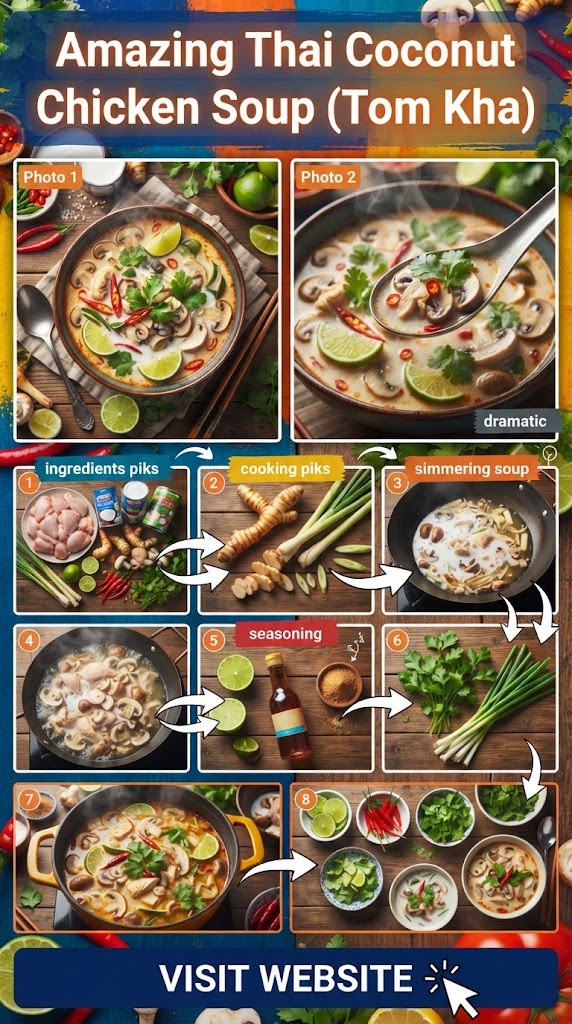
Thai Coconut Chicken Soup (Tom Kha Gai) — Creamy, Fragrant & Comforting
Thai Coconut Chicken Soup, traditionally known as Tom Kha Gai, is one of Thailand’s most beloved soups. It combines tender chicken, creamy coconut milk, aromatic lemongrass, galangal, lime leaves, chilies, mushrooms, and fresh lime juice into a soup that is simultaneously creamy, tangy, spicy, salty, and slightly sweet.
Unlike many heavy cream-based soups, Tom Kha gets its luxurious texture from coconut milk. The result is a soup that feels rich without becoming overwhelmingly heavy. Every spoonful has layers of flavor: the floral fragrance of lemongrass, the citrusy aroma of makrut lime leaves, the distinctive earthy flavor of galangal, the richness of coconut milk, and the bright acidity of fresh lime juice.
This homemade version is designed to be practical for a regular kitchen while still capturing the character of traditional Thai cooking.
What Is Tom Kha Gai?
Tom Kha Gai translates roughly to “boiled galangal chicken.”
- Tom means boiled or cooked in a broth.
- Kha refers to galangal.
- Gai means chicken.
Galangal is particularly important because it gives the soup its distinctive Thai character. It resembles ginger but has a different flavor—more citrusy, pine-like, floral, and peppery.
Tom Kha Gai is often confused with Tom Yum, another famous Thai soup. The two share several aromatic ingredients, but they are quite different.
Tom Yum is generally sharper, more intensely sour and spicy, and traditionally has a clearer broth.
Tom Kha Gai contains coconut milk, making it creamy, smooth, and slightly sweet while still maintaining the characteristic Thai balance of sour, salty, spicy, and aromatic flavors.
Why You’ll Love This Thai Coconut Chicken Soup
There are plenty of reasons to make Tom Kha Gai at home.
Creamy without being too heavy
Coconut milk creates a naturally creamy broth without requiring heavy cream, flour, or a roux.
Big flavor from simple ingredients
A handful of aromatic ingredients can transform ordinary chicken broth into an incredibly fragrant soup.
Quick enough for a weeknight
Once your ingredients are prepared, the soup comes together relatively quickly.
Easily adjustable
You can make it mild, spicy, extra tangy, more coconut-forward, or packed with mushrooms.
Perfect for cold weather
The warm broth and chili heat make it especially satisfying during chilly evenings.
Great as a main course
Serve it with jasmine rice, and the soup becomes a complete and filling meal.
Complete Ingredients
For the Soup
Chicken
- 1 pound boneless, skinless chicken thighs, thinly sliced
- 1/2 teaspoon salt
Chicken thighs are especially good because they stay juicy and tender. Chicken breast can also be used if preferred.
Aromatic Ingredients
- 4 cups chicken broth
- 1 can (13.5 ounces) full-fat coconut milk
- 3 stalks lemongrass
- 5–6 slices fresh galangal
- 5–6 makrut lime leaves
- 1 small piece fresh ginger, optional
- 3 cloves garlic, lightly crushed
- 1–2 Thai chilies, sliced
- 8 ounces mushrooms, sliced
Seasoning
- 2–3 tablespoons fish sauce
- 1–2 tablespoons brown sugar or palm sugar
- 3 tablespoons fresh lime juice
- 1 tablespoon Thai roasted chili paste, optional
- 1/2 teaspoon salt, only if needed
Garnish
- Fresh cilantro
- Sliced Thai chilies
- Fresh lime wedges
- Thinly sliced green onions
- Extra mushrooms, if desired
Ingredient Notes
Chicken
Chicken thighs are my first choice for Tom Kha Gai because they contain more fat than chicken breast and remain tender after simmering.
Slice the chicken thinly and evenly. Thin pieces cook quickly and absorb the flavorful broth.
If you prefer chicken breast, slice it into thin strips and avoid overcooking it.
Coconut Milk
Use full-fat unsweetened coconut milk for the best texture and flavor.
Light coconut milk can be used, but the finished soup will be thinner and less creamy.
Before opening the can, shake it well or stir it after opening if the coconut cream has separated.
Lemongrass
Lemongrass provides a fresh lemony aroma without making the soup taste exactly like lemon.
To prepare it:
- Remove the dry outer layers.
- Trim the top.
- Cut the stalk into 2–3-inch pieces.
- Lightly crush each piece with the side of a knife.
Crushing the stalk helps release its aromatic oils.
Because the pieces can be tough, many cooks leave them large enough to remove before serving.
Galangal
Galangal is the traditional ingredient that gives Tom Kha its distinctive flavor.
If you can find fresh galangal, use it.
Peel it if necessary and slice it thinly.
If fresh galangal is unavailable, frozen galangal is an excellent alternative. Ground galangal is less ideal because it changes the texture and intensity of the soup.
Ginger can work in an emergency, but it will not taste exactly like traditional Tom Kha.
Makrut Lime Leaves
Makrut lime leaves contribute an intense citrus fragrance.
Remove the tough central vein if desired and tear the leaves into smaller pieces to release their aroma.
Do not substitute ordinary lime zest in equal amounts. Lime zest can provide citrus flavor, but makrut lime leaves have a distinctive floral quality.
Mushrooms
Common white mushrooms, cremini mushrooms, oyster mushrooms, shiitake mushrooms, or a mixture can be used.
Oyster mushrooms are particularly delicious because their texture works beautifully with the tender chicken.
Fish Sauce
Fish sauce provides the salty, savory foundation of the soup.
Don’t worry if you don’t enjoy eating fish—the finished soup should not taste strongly fishy when properly balanced.
Start with less and add more toward the end.
Fresh Lime Juice
Fresh lime juice should be added toward the end of cooking.
This is important.
Boiling fresh lime juice for a long time can flatten its bright flavor.
Add it after the soup has finished simmering and taste before adding more.
How to Make Thai Coconut Chicken Soup
Step 1: Prepare the Chicken
Place the sliced chicken thighs in a bowl.
Season lightly with salt and set aside while you prepare the aromatic ingredients.
Do not heavily salt the chicken because fish sauce will provide a significant amount of salt later.
Step 2: Prepare the Lemongrass
Remove the tough outer leaves from the lemongrass.
Trim the ends.
Cut each stalk into several pieces and lightly crush them with the flat side of a knife.
Don’t mince the lemongrass unless you plan to eat it. Large pieces are easier to remove from the finished soup.
Step 3: Prepare the Galangal
Slice the galangal into thin rounds.
You don’t need to make the slices paper-thin.
The goal is simply to expose enough surface area for the broth to absorb its flavor.
Step 4: Prepare the Lime Leaves
Tear the makrut lime leaves into smaller pieces.
Tearing rather than simply dropping whole leaves into the broth helps release their aromatic oils.
Step 5: Start the Aromatic Broth
Pour the chicken broth into a medium-large pot.
Add:
- Lemongrass
- Galangal
- Makrut lime leaves
- Garlic
- Thai chilies
Bring the broth to a gentle simmer over medium heat.
Allow the aromatics to simmer for approximately 8–10 minutes.
This step is extremely important because you’re essentially creating an aromatic infusion before adding the coconut milk.
Step 6: Add the Coconut Milk
Reduce the heat to medium-low.
Pour in the coconut milk and stir gently.
The broth should become creamy and pale.
Do not allow the coconut milk to boil aggressively.
A gentle simmer helps maintain its smooth texture and prevents unnecessary separation.
Step 7: Add the Mushrooms
Add the sliced mushrooms.
Simmer for approximately 3–4 minutes, or until they begin to soften.
If using oyster mushrooms, separate larger clusters into smaller pieces before adding them.
Step 8: Add the Chicken
Add the thinly sliced chicken to the gently simmering soup.
Stir carefully to separate the pieces.
Cook for approximately 5–7 minutes, depending on the thickness of your chicken.
The chicken should be fully cooked but still tender.
Avoid prolonged boiling because chicken breast and thin chicken pieces can become dry.
Step 9: Season the Soup
Now add:
- 2 tablespoons fish sauce
- 1 tablespoon brown sugar or palm sugar
- Optional Thai roasted chili paste
Stir well.
Taste the broth.
At this point, you’re looking for a balanced combination of:
salty + creamy + slightly sweet + aromatic + spicy
Don’t add all the lime juice immediately.
Step 10: Add Fresh Lime Juice
Turn the heat to low or remove the pot from the heat.
Add approximately 3 tablespoons fresh lime juice.
Stir gently.
Taste again.
If the soup needs more brightness, add another tablespoon of lime juice.
If it tastes too sour, a small amount of sugar can restore balance.
Step 11: Adjust the Heat
Add more sliced Thai chilies if you want a spicier soup.
For a milder version, use fewer chilies or remove the seeds.
You can also serve fresh sliced chilies separately so everyone can customize their own bowl.
Step 12: Final Taste Test
Before serving, taste the soup one final time.
Ask yourself:
Is it salty enough?
Add fish sauce if necessary.
Is it sour enough?
Add lime juice.
Is it too sour?
Add a small amount of sugar.
Does it need more heat?
Add chili.
Is it too rich?
Add a small splash of chicken broth.
This final adjustment is what turns a good Tom Kha into a great one.
Step 13: Garnish and Serve
Ladle the hot soup into bowls.
Top with:
- Fresh cilantro
- Sliced green onions
- Thinly sliced Thai chilies
- Fresh lime wedges
Serve immediately.
The soup is especially delicious with steamed jasmine rice.
Full Recipe Card
Thai Coconut Chicken Soup (Tom Kha Gai)
Prep Time: 15 minutes
Cook Time: 20 minutes
Total Time: 35 minutes
Servings: 4–6
Cuisine: Thai
Course: Soup
Difficulty: Easy
Ingredients
- 1 pound boneless, skinless chicken thighs
- 4 cups chicken broth
- 1 can (13.5 ounces) full-fat coconut milk
- 3 stalks lemongrass
- 5–6 slices fresh galangal
- 5–6 makrut lime leaves
- 3 cloves garlic
- 1–2 Thai chilies
- 8 ounces mushrooms
- 2–3 tablespoons fish sauce
- 1–2 tablespoons brown sugar or palm sugar
- 3 tablespoons fresh lime juice
- 1 tablespoon Thai roasted chili paste, optional
- 1/2 teaspoon salt, or to taste
- Fresh cilantro for garnish
- Green onions for garnish
- Lime wedges for serving
Instructions
- Slice the chicken into thin, bite-sized pieces and season lightly with salt.
- Trim and crush the lemongrass.
- Slice the galangal.
- Tear the makrut lime leaves.
- Add chicken broth, lemongrass, galangal, lime leaves, garlic, and chilies to a pot.
- Bring to a gentle simmer and cook for 8–10 minutes.
- Reduce the heat and add coconut milk.
- Add mushrooms and simmer for 3–4 minutes.
- Add the chicken and cook for approximately 5–7 minutes, until completely cooked.
- Stir in fish sauce, sugar, and optional roasted chili paste.
- Remove from the heat or reduce the heat to very low.
- Stir in fresh lime juice.
- Taste and adjust the fish sauce, lime juice, sugar, and chili.
- Garnish with cilantro and green onions.
- Serve hot with lime wedges and jasmine rice if desired.
How to Get the Best Flavor
The secret to excellent Tom Kha Gai isn’t simply following a recipe. It’s understanding how to build the flavors.
Don’t Rush the Aromatics
Lemongrass, galangal, and makrut lime leaves need time to release their fragrance.
Give them several minutes in the broth before adding the other ingredients.
This creates a much more flavorful base.
Don’t Boil the Coconut Milk Aggressively
A gentle simmer is preferable.
Hard boiling isn’t necessary and can make the soup appear oily or separated.
Add Lime at the End
Fresh lime juice should be one of the final ingredients.
This preserves its bright, fresh flavor.
Taste Before Serving
Thai cooking often focuses on balance rather than simply following exact measurements.
Your coconut milk may be sweeter than another brand.
Your fish sauce may be saltier.
Your limes may be more acidic.
That’s why tasting and adjusting is so important.
How to Make Tom Kha Gai Less Spicy
If you’re serving children or people who don’t enjoy spicy food, Tom Kha can easily be made milder.
Use only one Thai chili or omit the chilies entirely.
You can also remove the chili seeds.
Another option is to serve sliced chilies on the side.
This allows everyone to control their own spice level.
How to Make It Spicier
For serious heat, use additional Thai chilies.
You can also add Thai roasted chili paste.
Add it gradually because different brands vary significantly in heat and saltiness.
A spoonful of chili paste can also deepen the color and add roasted complexity.
Can You Use Chicken Breast?
Absolutely.
Chicken breast produces a leaner soup.
The important thing is to slice it thinly and avoid overcooking.
Because thin pieces cook quickly, they generally need only several minutes in the simmering broth.
Chicken thighs are more forgiving, but both cuts work.
Can You Make Tom Kha Without Chicken?
Yes.
The soup can easily be adapted.
Shrimp Tom Kha
Replace the chicken with peeled shrimp.
Add the shrimp near the end of cooking because shrimp cook quickly.
Tofu Tom Kha
Use firm or extra-firm tofu cut into cubes.
Vegetable Tom Kha
Use mushrooms, baby corn, zucchini, carrots, broccoli, or other vegetables.
For a vegetarian version, replace fish sauce with a suitable vegetarian seasoning sauce.
What to Serve With Tom Kha Gai
Tom Kha is delicious on its own, but several side dishes can turn it into a complete Thai-inspired meal.
Jasmine Rice
Steamed jasmine rice is one of the best accompaniments.
Its subtle fragrance and fluffy texture work beautifully with the creamy broth.
Thai Cucumber Salad
A crisp cucumber salad provides refreshing contrast to the rich soup.
Steamed Vegetables
Broccoli, bok choy, or green beans can provide additional texture and nutrition.
Thai-Style Fried Rice
For a larger meal, serve a small portion of Thai fried rice alongside the soup.
Fresh Herbs
Cilantro, Thai basil, and green onions can all be used as finishing herbs.
Storage Instructions
Allow leftover soup to cool before transferring it to an airtight container.
Refrigerate for up to 3–4 days.
When reheating, use medium-low heat.
Avoid boiling the soup aggressively.
The coconut milk may separate slightly during refrigeration. This is normal.
Stir gently while reheating and the soup should come back together.
Can You Freeze Tom Kha Gai?
Yes, although the texture can change slightly.
Coconut milk may separate when frozen and thawed.
If freezing, allow the soup to cool completely and place it in a freezer-safe container.
Leave some room for expansion.
Freeze for up to approximately 2–3 months for best quality.
Thaw overnight in the refrigerator.
Reheat slowly over low to medium-low heat while stirring gently.
A small splash of fresh coconut milk or broth can help restore the texture.
Common Mistakes to Avoid
Mistake 1: Using Too Much Lime
Tom Kha should be tangy, but excessive lime can overpower the coconut milk and aromatics.
Start with a moderate amount and increase gradually.
Mistake 2: Boiling the Soup Hard
Keep the soup at a gentle simmer.
Mistake 3: Overcooking the Chicken
Thin chicken pieces cook quickly.
Once they’re fully cooked, don’t continue simmering unnecessarily.
Mistake 4: Using Too Much Sugar
Sugar should balance the sourness and spice, not make the soup taste sweet like dessert.
Mistake 5: Skipping the Aromatics
The coconut milk alone does not create Tom Kha’s signature flavor.
Lemongrass, galangal, and makrut lime leaves are central to the dish.
Mistake 6: Adding Lime Too Early
Fresh lime juice tastes brightest when added near the end.
Tips for Making Restaurant-Style Tom Kha
Use Full-Fat Coconut Milk
It provides the smoothest texture and richest coconut flavor.
Use Fresh Aromatics
Fresh lemongrass, galangal, and makrut lime leaves make a noticeable difference.
Slice Chicken Thinly
Thin slices cook quickly and stay tender.
Balance the Four Major Flavors
A good Tom Kha should have a harmony of:
- Salty
- Sour
- Sweet
- Spicy
None should completely dominate.
Finish With Fresh Herbs
Fresh cilantro and chilies make the soup taste brighter and fresher.
Frequently Asked Questions
Is Tom Kha Gai spicy?
It can be.
Traditional versions often contain chilies, but the amount can easily be adjusted.
For a mild soup, use one chili or omit it.
Is Tom Kha Gai the same as Tom Yum?
No.
Both are Thai soups containing aromatic ingredients such as lemongrass and lime leaves, but Tom Kha typically contains coconut milk and has a creamier, richer character.
Tom Yum is generally sharper and more intensely sour and spicy.
Can I use ginger instead of galangal?
Yes, if necessary.
However, ginger does not have exactly the same flavor as galangal.
For the most authentic flavor, use fresh or frozen galangal when possible.
Can I use regular lime leaves?
If by regular lime leaves you mean makrut lime leaves, yes.
They are the traditional ingredient.
If you don’t have them, the soup can still be made, although it will lose some of its characteristic citrus aroma.
Can I use canned mushrooms?
Fresh mushrooms are preferable because they provide better texture.
However, canned mushrooms can work in a pinch.
Drain and rinse them before adding them near the end of cooking.
Why did my coconut milk separate?
Coconut milk can naturally separate, especially when exposed to high heat.
Gentle cooking and regular stirring can help maintain a smoother appearance.
Even if some separation occurs, the soup can still taste delicious.
Easy Variations
Creamier Tom Kha
Add a little extra coconut milk.
This creates a richer and milder soup.
Extra-Lime Tom Kha
Add additional fresh lime juice immediately before serving.
This is especially refreshing during warmer weather.
Mushroom-Heavy Tom Kha
Double the mushrooms for a heartier vegetarian-friendly variation.
Tom Kha With Shrimp
Replace chicken with shrimp and cook just until the shrimp become opaque and curled.
Tom Kha With Vegetables
Add vegetables such as:
- Baby corn
- Bell peppers
- Zucchini
- Carrots
- Broccoli
- Snow peas
Add harder vegetables earlier and delicate vegetables later.
Nutrition and Portion Considerations
The nutritional content of Tom Kha Gai depends heavily on the amount of coconut milk, chicken, fish sauce, and sugar used.
Coconut milk contributes fat and calories while chicken provides protein.
If you’d like a lighter version, use reduced-fat coconut milk, increase the mushrooms and vegetables, and serve a smaller portion of rice alongside the soup.
Keep in mind that fish sauce is naturally high in sodium, so people monitoring sodium intake may want to reduce it and use a lower-sodium broth.
Why This Soup Works So Well
The magic of Tom Kha Gai comes from contrast.
The coconut milk is rich and creamy.
The lime is bright and acidic.
The fish sauce is salty and deeply savory.
The sugar rounds out sharp edges.
The chilies provide heat.
The lemongrass adds citrusy fragrance.
The galangal contributes a distinctive earthy spice.
The makrut lime leaves bring floral citrus notes.
Chicken provides satisfying protein, while mushrooms add savory depth and texture.
Each ingredient has a job, and together they create a remarkably complex soup.
Final Tips for Perfect Tom Kha Gai
For the best results, remember these simple principles:
Use full-fat coconut milk for richness.
Use chicken thighs for especially tender meat.
Don’t skip lemongrass, galangal, and makrut lime leaves if you want the characteristic Tom Kha flavor.
Simmer gently rather than boiling aggressively.
Add fresh lime juice near the end.
Taste and adjust the seasoning before serving.
Serve immediately with fresh herbs and lime.
Most importantly, don’t be afraid to adjust the soup to your preference. Thai cooking is all about balance, and the ideal Tom Kha for one person may be slightly more sour or spicy than another person’s version.
Final Serving Suggestion
For a beautiful dinner presentation, ladle the creamy soup into warm bowls and arrange the chicken and mushrooms so they are visible on top. Sprinkle with fresh cilantro and sliced green onions, then add a few thin slices of Thai chili for color.
Place a fresh lime wedge alongside each bowl.
Serve with steamed jasmine rice and allow everyone to add additional lime, chili, or fish sauce according to their taste.
The finished soup should be creamy but not overly thick, aromatic but not overpowering, tangy but not harsh, spicy but balanced, and savory with a gentle sweetness from the coconut milk and sugar.
That balance is what makes Thai Coconut Chicken Soup (Tom Kha Gai) so special—and why this comforting Thai classic deserves a regular place in your homemade dinner rotation.