
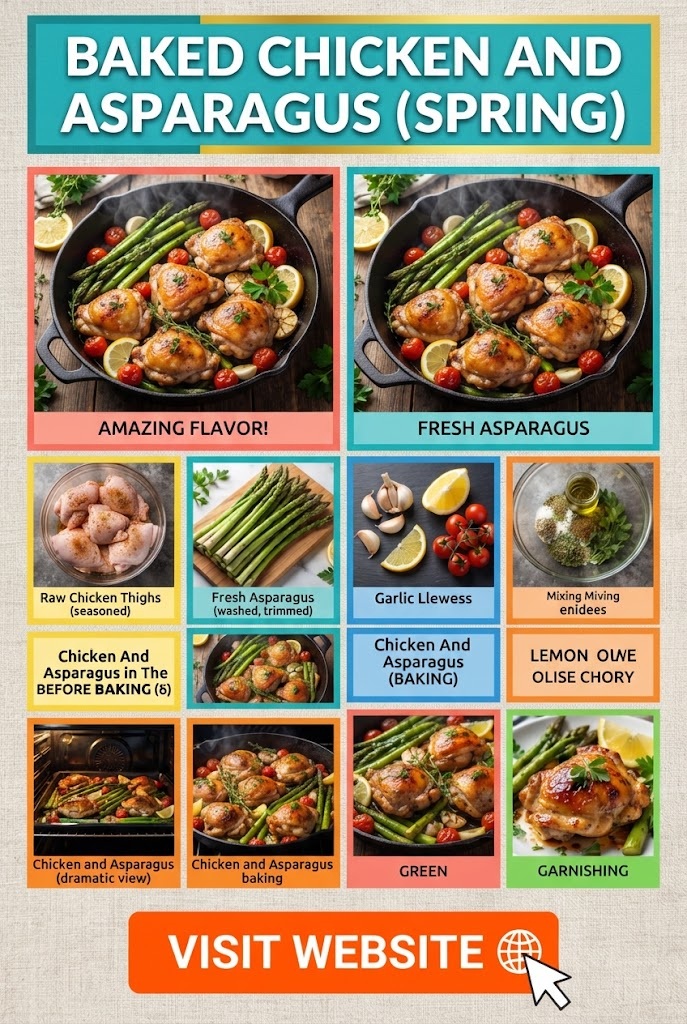
Baked Chicken and Asparagus (Spring)
Baked Chicken and Asparagus is a fresh, wholesome, and easy dinner that brings together tender chicken, crisp-tender asparagus, garlic, lemon, herbs, and a simple savory seasoning. It is the kind of meal that feels light enough for spring but satisfying enough for a family dinner. Best of all, everything can be prepared in one baking dish, which means less cleanup after cooking.
This recipe is especially useful for busy weeknights because it requires simple ingredients and straightforward preparation. The chicken is seasoned generously and baked alongside asparagus until the chicken is juicy and fully cooked while the asparagus develops lightly roasted edges. A finishing touch of fresh lemon juice adds brightness and balances the savory flavors.
Why You’ll Love This Baked Chicken and Asparagus
There are plenty of reasons to add this recipe to your regular dinner rotation.
First, it is simple. You do not need complicated sauces or specialized cooking equipment. A baking dish, a mixing bowl, and a few kitchen essentials are enough.
Second, it is balanced. Chicken provides a satisfying source of protein, while asparagus adds a fresh vegetable component. Garlic, lemon, olive oil, and herbs give the dish plenty of flavor without requiring a heavy sauce.
Third, it is versatile. You can serve it with rice, potatoes, pasta, quinoa, couscous, or a simple green salad.
Finally, it is excellent for spring entertaining. The green asparagus and fresh lemon make the finished dish look colorful and seasonal.
Complete Recipe
Recipe Name
Baked Chicken and Asparagus (Spring)
Cuisine
American-inspired
Course
Dinner / Main Course
Preparation Time
20 minutes
Marinating Time
15–30 minutes, optional
Cooking Time
25–35 minutes
Total Time
About 55–65 minutes
Servings
4
Difficulty
Easy
Ingredients
For the Chicken
- 4 boneless, skinless chicken breasts, about 6–8 ounces each
- 1½ tablespoons olive oil
- 1 teaspoon kosher salt
- ½ teaspoon freshly ground black pepper
- 1 teaspoon garlic powder
- 1 teaspoon paprika
- ½ teaspoon dried oregano
- ½ teaspoon dried thyme
- ½ teaspoon onion powder
For the Asparagus
- 1 pound fresh asparagus
- 1 tablespoon olive oil
- ½ teaspoon kosher salt
- ¼ teaspoon black pepper
- 2 cloves garlic, finely minced
- ½ teaspoon dried oregano
For the Lemon Herb Finish
- 1 tablespoon fresh lemon juice
- 1 teaspoon finely grated lemon zest
- 1 tablespoon melted butter
- 1 tablespoon chopped fresh parsley
- 1 tablespoon freshly grated Parmesan cheese, optional
- Lemon wedges for serving
Optional Ingredients
You can customize the recipe with additional ingredients depending on the flavor you want.
For extra garlic flavor
Add 2–3 additional minced garlic cloves.
For a cheesy finish
Sprinkle Parmesan or mozzarella over the chicken during the final few minutes of baking.
For a creamy version
Serve the finished chicken with a small amount of garlic cream sauce.
For extra heat
Add ¼–½ teaspoon crushed red pepper flakes.
For Mediterranean flavor
Add sliced cherry tomatoes, Kalamata olives, and a little feta cheese.
For a buttery finish
Increase the melted butter to 2 tablespoons and brush it over the chicken before serving.
How to Choose the Best Chicken
Chicken breasts work particularly well for this recipe because they are lean, readily available, and easy to season.
However, chicken breasts vary considerably in thickness. Very thick chicken breasts can take much longer to cook than asparagus, which creates a problem: the chicken may still be cooking while the asparagus becomes too soft.
For more even cooking, use chicken breasts of similar size.
If your chicken breasts are extremely thick, place each breast between two pieces of plastic wrap or parchment and gently pound them to an even thickness.
You can also use boneless, skinless chicken thighs. They generally remain juicy and flavorful and can be very forgiving during baking.
How to Choose Fresh Asparagus
Fresh asparagus makes a major difference in this recipe.
Look for asparagus spears that are:
- Firm
- Bright green
- Smooth
- Not limp
- Free from excessive wrinkling
- Firm around the tips
The tips should be compact rather than mushy or spreading apart.
Very thin asparagus cooks quickly, while thick asparagus requires more time. If your asparagus is extremely thin, consider adding it partway through the baking process rather than at the beginning.
Preparing the Asparagus
Start by washing the asparagus under cool running water.
Pat it thoroughly dry with a clean kitchen towel or paper towels.
Next, trim the woody ends.
There are two easy approaches.
Method 1: Snap the Ends
Hold one asparagus spear with both hands. Bend it gently until the woody portion naturally breaks away.
Repeat with the remaining spears.
Method 2: Trim with a Knife
Line the asparagus spears together on a cutting board and cut off approximately 1–2 inches from the bottom.
The second method is faster when preparing a large bunch.
Preparing the Chicken
Place the chicken breasts on a clean cutting board.
If they are very thick, gently pound them until they have a relatively even thickness.
Pat the chicken dry using paper towels.
This is an important step because removing excess surface moisture helps the seasoning adhere and encourages better browning.
In a small bowl, combine:
- Salt
- Black pepper
- Garlic powder
- Paprika
- Oregano
- Thyme
- Onion powder
Rub the chicken with olive oil.
Then sprinkle the seasoning mixture evenly over both sides of each chicken breast.
Press the seasoning gently into the chicken so it adheres well.
For deeper flavor, let the seasoned chicken rest for 15–30 minutes before baking.
Preparing the Asparagus
Place the trimmed asparagus in a bowl.
Add:
- Olive oil
- Salt
- Black pepper
- Minced garlic
- Oregano
Toss gently until the asparagus is evenly coated.
Do not drown the asparagus in oil. A light coating is enough.
Preparing the Baking Dish
Preheat the oven to 400°F (200°C).
Lightly grease a large baking dish or rimmed baking sheet.
Arrange the chicken pieces in the center, leaving a little space between them.
Place the asparagus around the chicken.
Avoid piling the asparagus on top of itself. A single layer allows the heat to circulate and helps the vegetables roast instead of steam.
How to Cook Baked Chicken and Asparagus
Step 1: Preheat the Oven
Preheat your oven to 400°F (200°C).
Allow the oven to fully preheat before putting the chicken inside.
A properly heated oven gives you more predictable cooking results.
Step 2: Season the Chicken
Coat each chicken breast with olive oil and the prepared spice mixture.
Make sure the seasoning covers the entire surface.
The paprika adds attractive color, while garlic, oregano, thyme, and onion powder create a savory herb flavor.
Step 3: Prepare the Asparagus
Toss the asparagus with olive oil, garlic, salt, pepper, and oregano.
Spread it around the chicken.
If the asparagus spears are particularly thin, reserve them and add them later during baking.
Step 4: Bake
Place the baking dish in the preheated oven.
Bake for approximately 25–35 minutes, depending on the thickness of your chicken breasts.
Cooking time varies, so avoid relying only on the clock.
The safest way to determine whether chicken is properly cooked is to use an instant-read thermometer.
The thickest part of the chicken should reach 165°F (74°C).
Step 5: Check the Asparagus
The asparagus should become bright green and tender while still retaining some texture.
You do not want it to become extremely soft or mushy.
If the asparagus is finished before the chicken, remove it from the baking dish and return it to the dish just before serving.
Step 6: Make the Lemon Butter Finish
While the chicken is baking, combine:
- Melted butter
- Fresh lemon juice
- Lemon zest
- Chopped parsley
Whisk everything together.
The lemon provides acidity, while butter adds richness.
Step 7: Finish the Chicken
When the chicken reaches 165°F (74°C), remove the baking dish from the oven.
Allow the chicken to rest for about 5 minutes.
Drizzle the lemon butter mixture over the chicken and asparagus.
Sprinkle with fresh parsley and optional Parmesan cheese.
Serve immediately with lemon wedges.
The Secret to Juicy Baked Chicken
The biggest challenge when baking chicken breasts is preventing them from becoming dry.
Here are several ways to keep the chicken juicy.
1. Do Not Overcook It
This is the most important rule.
Use a thermometer and remove the chicken once the thickest portion reaches 165°F (74°C).
2. Use Evenly Sized Chicken
Chicken breasts that are dramatically different in thickness will finish cooking at different times.
3. Pat the Chicken Dry
Removing surface moisture allows the oil and seasoning to adhere better.
4. Add Olive Oil
A light coating of olive oil helps keep the surface flavorful and promotes browning.
5. Let It Rest
After baking, allow the chicken to rest for approximately 5 minutes.
This gives the juices time to redistribute.
How to Get Perfectly Roasted Asparagus
Asparagus should be tender but not mushy.
The key is controlling the cooking time.
If you are using thick asparagus, you can place it in the baking dish at the same time as the chicken.
For thin asparagus, consider adding it after the chicken has been baking for approximately 10–15 minutes.
This allows the asparagus to finish at approximately the same time as the chicken.
Another important tip is to avoid overcrowding.
Too much asparagus in a small dish causes it to release moisture and steam instead of roast.
Can You Use Chicken Thighs?
Absolutely.
Boneless, skinless chicken thighs are an excellent alternative.
They have more fat than chicken breasts and tend to remain juicy during baking.
Season them using the same spice mixture.
Because chicken thighs can vary in size, use the internal temperature rather than relying strictly on the cooking time.
Chicken should reach 165°F (74°C) in the thickest part.
Can You Use Frozen Asparagus?
Fresh asparagus is preferred because it roasts better and maintains a firmer texture.
Frozen asparagus can work in an emergency, but it generally contains more moisture.
If using frozen asparagus:
- Thaw it completely.
- Drain excess water.
- Pat it very dry.
- Toss lightly with oil and seasonings.
- Add it toward the later portion of cooking.
This helps prevent watery vegetables.
Delicious Variations
Lemon Garlic Chicken and Asparagus
Increase the garlic and lemon zest for a stronger citrus-garlic profile.
Add thin slices of lemon directly to the baking dish before cooking.
Parmesan Chicken and Asparagus
During the final 3–5 minutes of baking, sprinkle Parmesan cheese over the chicken and asparagus.
Return the dish to the oven until the cheese melts and lightly browns.
Creamy Chicken and Asparagus
Prepare a simple sauce using:
- Heavy cream
- Garlic
- Parmesan
- Black pepper
- A little chicken broth
Pour the sauce around the cooked chicken and asparagus before serving.
Mediterranean Chicken and Asparagus
Add:
- Cherry tomatoes
- Feta cheese
- Kalamata olives
- Fresh parsley
- Lemon
The result is bright, salty, fresh, and flavorful.
Spicy Chicken and Asparagus
Add:
- Crushed red pepper flakes
- Smoked paprika
- A pinch of cayenne
Finish with fresh lemon juice to balance the heat.
What to Serve with Baked Chicken and Asparagus
This recipe can be served on its own, but adding a side dish can turn it into a more substantial meal.
Rice
Steamed white rice, brown rice, basmati rice, or wild rice works beautifully.
The rice can absorb the flavorful lemon butter juices.
Roasted Potatoes
Crispy roasted potatoes make the meal hearty and satisfying.
Mashed Potatoes
Creamy mashed potatoes provide a comforting contrast to the fresh asparagus.
Pasta
Serve the chicken and asparagus over spaghetti, penne, or angel hair pasta.
Add extra lemon butter or Parmesan for a simple pasta dinner.
Quinoa
Quinoa creates a lighter, protein-rich side that complements the chicken.
Dinner Rolls
Warm dinner rolls are ideal for soaking up the lemon butter juices.
Simple Salad
A crisp green salad with lettuce, cucumber, tomatoes, and a lemon vinaigrette keeps the meal fresh.
Storage Instructions
Allow leftovers to cool before transferring them to airtight containers.
Store the cooked chicken and asparagus in the refrigerator.
For best quality, consume within 3–4 days.
Keep the chicken and vegetables separate if you plan to reheat them independently.
How to Reheat
The microwave is the fastest option, but it can make chicken dry if overheated.
Place the chicken on a microwave-safe plate and cover loosely.
Heat in short intervals until warmed through.
For better texture, reheat the chicken and asparagus in a 350°F (175°C) oven until hot.
Adding a small splash of chicken broth or a little butter can help prevent the chicken from drying.
Can You Freeze This Recipe?
The cooked chicken can be frozen, although asparagus may lose some of its crisp texture after freezing and thawing.
For best results, freeze the cooked chicken separately.
Place cooled chicken in an airtight freezer-safe container or freezer bag.
Remove as much excess air as possible.
Label and freeze.
When ready to eat, thaw the chicken in the refrigerator before reheating thoroughly.
Meal Prep Tips
Baked Chicken and Asparagus is a useful meal-prep recipe.
Cook several chicken breasts at once and divide them into individual containers.
Add asparagus and your preferred side dish.
Good meal-prep combinations include:
- Chicken + asparagus + brown rice
- Chicken + asparagus + roasted potatoes
- Chicken + asparagus + quinoa
- Chicken + asparagus + pasta
- Chicken + asparagus + couscous
Keep sauces or lemon dressing separate until serving when possible.
This helps preserve the texture of the vegetables.
Common Mistakes to Avoid
Mistake 1: Overcooking the Chicken
The chicken may become dry and chewy.
Solution: Use a thermometer rather than guessing.
Mistake 2: Using a Crowded Pan
Crowding causes vegetables to steam.
Solution: Use a large baking dish or sheet pan.
Mistake 3: Adding Too Much Oil
Excess oil can make the finished dish greasy.
Solution: Use enough oil to lightly coat the ingredients.
Mistake 4: Not Drying the Chicken
Wet chicken can prevent seasoning from adhering properly.
Solution: Pat it dry before seasoning.
Mistake 5: Ignoring Asparagus Thickness
Thin asparagus cooks much faster than thick asparagus.
Solution: Adjust the timing according to the size of the spears.
Mistake 6: Cutting Chicken Immediately
Cutting into the chicken immediately after removing it from the oven can cause juices to escape.
Solution: Rest for approximately 5 minutes.
Frequently Asked Questions
Can I make this recipe with chicken thighs?
Yes. Boneless, skinless chicken thighs work very well. Adjust cooking time according to their size and always verify that the thickest portion reaches 165°F (74°C).
Can I use chicken tenders?
Yes. Chicken tenders cook much faster than full chicken breasts, so add the asparagus accordingly and monitor the chicken carefully.
Can I add cheese?
Yes. Parmesan, mozzarella, provolone, or a little feta can work well.
Can I make this without butter?
Absolutely. Replace the butter with additional olive oil or simply finish the dish with lemon juice and fresh herbs.
What herbs work best?
Parsley, thyme, oregano, basil, rosemary, and dill all pair nicely with chicken and asparagus.
Can I prepare it ahead?
You can season the chicken and prepare the asparagus several hours ahead. Store them separately in the refrigerator until ready to bake.
How do I know when asparagus is done?
It should be tender when pierced with a fork but should still have some firmness.
Can I use bottled lemon juice?
Fresh lemon juice is strongly recommended because it provides a brighter flavor, but bottled lemon juice can be used if necessary.
Nutrition Information
Approximate nutrition per serving will vary depending on the size of the chicken breasts and exact ingredients used.
A typical serving contains approximately:
- Calories: 350–450
- Protein: 45–55 g
- Fat: 15–22 g
- Carbohydrates: 6–10 g
- Fiber: 3–4 g
- Sugar: 2–4 g
- Sodium: Depends on seasoning and salt used
These numbers are estimates rather than laboratory-tested nutritional values.
Helpful Cooking Tips
For the best results, remember these simple principles:
Use fresh asparagus. It gives the recipe its characteristic springtime flavor.
Season generously. Chicken breasts have a mild flavor and benefit from herbs and spices.
Do not overcook. Temperature is more reliable than cooking time.
Use fresh lemon. Lemon juice and zest brighten the entire dish.
Give the chicken room. Spacing encourages roasting rather than steaming.
Rest before slicing. Five minutes is enough to improve the texture.
Finish with herbs. Fresh parsley makes the dish look and taste fresher.
Serving Presentation
Presentation is surprisingly easy with this recipe.
Place two or three asparagus spears on each plate.
Slice the chicken breast diagonally into attractive pieces.
Arrange the slices over or beside the asparagus.
Drizzle with the lemon butter sauce.
Finish with:
- Fresh parsley
- Lemon zest
- Parmesan
- A lemon wedge
The contrast between the golden chicken and bright green asparagus creates a naturally attractive spring dinner.
Final Thoughts
Baked Chicken and Asparagus is a wonderful example of how simple ingredients can create an impressive meal. Tender seasoned chicken, fresh asparagus, garlic, lemon, herbs, and a little butter come together in one dish without requiring complicated cooking techniques.
The recipe is especially well suited to spring because asparagus is naturally associated with the season, while lemon and fresh herbs keep the overall flavor bright and refreshing.
Whether you’re cooking a quick weeknight dinner, preparing meals for the week, or serving guests, this recipe gives you a dependable combination of flavor, simplicity, and versatility.
The most important things to remember are to choose evenly sized chicken breasts, season them well, avoid overcrowding the pan, watch the asparagus carefully, and use a thermometer to make sure the chicken reaches 165°F (74°C).
Serve it with rice, potatoes, pasta, quinoa, or a crisp salad for a complete meal. Add Parmesan for richness, red pepper flakes for heat, or extra lemon and herbs for an even fresher spring flavor.
Once you make this recipe, it is easy to adapt it to your own taste and turn it into a regular family favorite.