
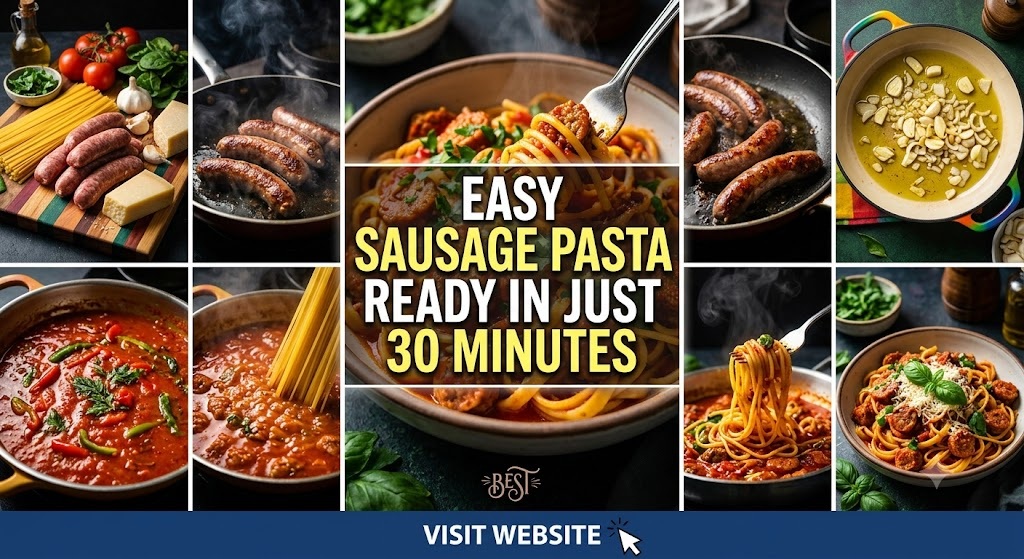
The Heart of the Dish: Why Sausage is the Weeknight Hero
When we talk about “fast” cooking, people often assume it means sacrificing flavor. But the beauty of using sausage as your primary protein is the built-in seasoning. Whether you choose sweet, mild, or hot Italian sausage, you are getting a concentrated blend of fennel, garlic, paprika, and black pepper right out of the gate.
In this specific preparation, we aren’t just tossing cooked meat with noodles. We are building a “fond”—those beautiful, caramelized brown bits at the bottom of the pan—and using them to create a silky, savory sauce that clings to every ridge of the pasta. It’s a technique that elevates a humble box of dried pasta into something truly special.
Ingredients You’ll Need to Gather
Before we fire up the stove, let’s talk about the components. This recipe is forgiving, but using quality staples makes a world of difference.
1. The Sausage
I recommend using high-quality Italian pork sausage. If you want a leaner profile, turkey or chicken sausage works exceptionally well, though you may need to add a splash more olive oil to the pan since those varieties have less natural fat. For a family-friendly version, go with “Sweet Italian.” If you like a kick that clears the sinuses, “Hot Italian” is your best friend.
2. The Pasta
Shape matters more than you might think. For this sauce, you want something with nooks, crannies, or ridges. Penne, Rigatoni, or Fusilli are the gold standards. They act like little scoops for the bits of sausage and the creamy sauce. If you’re feeling fancy, Orecchiette (little ears) is a traditional choice that provides a wonderful texture.
3. The Aromatics
Fresh garlic and yellow onion are non-negotiable. They provide the base notes of flavor. If you find yourself in an absolute pinch, shallots offer a more delicate, sophisticated sweetness.
4. The Liquid Gold (Pasta Water and Cream)
Don’t you dare drain all that pasta water down the sink! That starchy liquid is the secret to emulsifying your sauce. We also use a splash of heavy cream or half-and-half to add a velvety finish that rounds out the acidity of the tomatoes.
5. The Greens
To make this a true one-pan-style meal, I love wilting in a few handfuls of baby spinach or chopped kale at the very end. It adds color, nutrition, and a fresh contrast to the richness of the meat.Meta Title (High CTR):
Sausage Pasta Easy Weeknight Dinner – 30 Minute Creamy Italian Pasta Recipe
Meta Description:
Make this easy sausage pasta recipe in just 30 minutes! A creamy, cheesy, flavor-packed weeknight dinner with simple ingredients and step-by-step instructions.
Sausage Pasta Easy Weeknight Dinner
Looking for a quick, comforting dinner that’s full of flavor? This Sausage Pasta Easy Weeknight Dinner is the perfect solution. Made with juicy Italian sausage, tender pasta, garlic, tomatoes, cream, and Parmesan cheese, this one-pan recipe is rich, satisfying, and ready in about 30 minutes. It’s ideal for busy families, meal prep, or a cozy dinner any night of the week.
Recipe Information
- Prep Time: 10 minutes
- Cook Time: 20 minutes
- Total Time: 30 minutes
- Servings: 4
- Cuisine: Italian-American
- Course: Main Course
- Difficulty: Easy
Ingredients
For the Pasta
- 12 ounces (340g) penne, rigatoni, or fusilli pasta
- Water for boiling
- 1 tablespoon salt (for pasta water)
For the Sauce
- 1 tablespoon olive oil
- 1 pound (450g) Italian sausage (mild or spicy), casings removed
- 1 small onion, finely chopped
- 4 cloves garlic, minced
- 1 teaspoon Italian seasoning
- ½ teaspoon paprika
- ¼ teaspoon crushed red pepper flakes (optional)
- 1 can (14 ounces) diced tomatoes
- 1 cup heavy cream
- ½ cup chicken broth
- 1 cup freshly grated Parmesan cheese
- Salt and black pepper, to taste
Optional Add-Ins
- 2 cups fresh spinach
- ½ cup sliced mushrooms
- ½ cup sun-dried tomatoes
- Fresh basil or parsley for garnish
Kitchen Equipment
- Large pot
- Large skillet or sauté pan
- Wooden spoon
- Colander
- Measuring cups and spoons
- Cheese grater
Step-by-Step Instructions
Step 1: Cook the Pasta
- Bring a large pot of salted water to a boil.
- Add the pasta.
- Cook until al dente according to the package directions.
- Reserve ½ cup of pasta water before draining.
- Drain the pasta and set aside.
Step 2: Brown the Sausage
- Heat olive oil in a large skillet over medium-high heat.
- Add the sausage.
- Break it into small pieces using a wooden spoon.
- Cook for 6–8 minutes until browned and fully cooked.
- Drain excess grease if necessary.
Step 3: Cook the Vegetables
- Add chopped onion.
- Cook for 3–4 minutes until softened.
- Stir in garlic.
- Cook for 30 seconds until fragrant.
Step 4: Add the Seasonings
Mix in:
- Italian seasoning
- Paprika
- Red pepper flakes
Cook for about 30 seconds to release the flavors.
Step 5: Make the Sauce
Add:
- Diced tomatoes
- Chicken broth
Simmer for 5 minutes.
Reduce heat to low.
Slowly stir in:
- Heavy cream
- Parmesan cheese
Continue stirring until the cheese melts into a smooth, creamy sauce.
Step 6: Add Vegetables (Optional)
If using spinach:
- Stir it into the sauce.
- Cook for 1–2 minutes until wilted.
If using mushrooms:
- Sauté them before adding the tomatoes.
Step 7: Combine Everything
- Add the cooked pasta to the skillet.
- Toss until every piece is coated in the creamy sausage sauce.
- If the sauce becomes too thick, add a splash of reserved pasta water.
Taste and adjust with salt and black pepper.
Step 8: Garnish and Serve
Top with:
- Fresh Parmesan cheese
- Chopped parsley
- Fresh basil
- Cracked black pepper
Serve immediately while hot.
Chef’s Tips
- Use freshly grated Parmesan for the smoothest sauce.
- Don’t overcook the pasta; it will continue cooking in the sauce.
- Reserve pasta water to adjust the sauce consistency.
- Brown the sausage well for deeper flavor.
- Add spinach at the end to keep it vibrant and tender.
Recipe Variations
Creamy Garlic Sausage Pasta
Add 2 extra cloves of garlic for a richer garlic flavor.
Spicy Sausage Pasta
Use hot Italian sausage and increase the red pepper flakes.
Mushroom Sausage Pasta
Add 1 cup sliced mushrooms while cooking the onions.
Healthy Version
Use turkey or chicken sausage and replace heavy cream with half-and-half.
Extra Cheesy Pasta
Mix in shredded mozzarella along with the Parmesan.
What to Serve With Sausage Pasta
- Garlic bread
- Caesar salad
- Roasted broccoli
- Garlic green beans
- Steamed asparagus
- Bruschetta
- Fresh garden salad
Storage Instructions
Refrigerator
Store leftovers in an airtight container for up to 4 days.
Freezer
Freeze for up to 2 months. Thaw overnight in the refrigerator before reheating.
Reheating
Microwave
Heat in 30-second intervals, stirring between each, until hot.
Stovetop
Reheat over medium-low heat with a splash of milk, cream, or chicken broth to loosen the sauce.
Nutrition Information (Per Serving)
- Calories: 640
- Protein: 28g
- Carbohydrates: 45g
- Fat: 39g
- Saturated Fat: 17g
- Fiber: 3g
- Sugar: 5g
- Sodium: 920mg
- Calcium: 280mg
Nutrition values are estimates and may vary based on ingredients used.
Frequently Asked Questions
Can I use any type of sausage?
Yes. Italian sausage works best, but chicken, turkey, smoked, or spicy sausage are all great options.
What pasta works best?
Penne, rigatoni, fusilli, rotini, and shells hold the creamy sauce very well.
Can I make it ahead of time?
Yes. Prepare it up to 2 days in advance and reheat gently with a splash of cream or broth.
Can I freeze it?
Yes, although cream-based sauces may separate slightly. Stir well while reheating to restore a creamy texture.
How do I make it less rich?
Replace the heavy cream with half-and-half or evaporated milk for a lighter sauce.
Recipe Notes
Taste and adjust the seasoning before serving.
Reserve pasta water before draining to help adjust the sauce.
Freshly grated Parmesan melts more smoothly than pre-shredded cheese.
For the best flavor, use high-quality Italian sausage.
Step-By-Step: Turning Chaos into Cuisine
Step 1: The Pasta Foundation
Start by bringing a large pot of heavily salted water to a rolling boil. I’m talking “salty like the sea.” This is your only chance to season the pasta itself. Drop your noodles and cook them for exactly one minute less than the package directions for “al dente.” They will finish cooking in the sauce later.
2. The Great Browning
While the water is heating, take a large skillet or a Dutch oven and place it over medium-high heat. If your sausage is in casings, squeeze the meat out like toothpaste into the pan. Break it up with a wooden spoon or a potato masher (a pro tip for getting those perfectly small crumbles). Let it sit undisturbed for 2-3 minutes to get a deep, dark brown crust. That color is where the flavor lives.
3. Sautéing the Aromatics
Once the sausage is browned and cooked through, use a slotted spoon to remove the meat, leaving the rendered fat in the pan. If the pan looks dry, add a tablespoon of olive oil. Drop in your diced onions and cook until translucent. Add the minced garlic and a pinch of red pepper flakes, stirring constantly for about 30 seconds so the garlic doesn’t burn.
4. Deglazing and Building the Sauce
If you have a splash of dry white wine (like Pinot Grigio or Sauvignon Blanc) in the fridge, now is the time to pour in about a quarter cup. Use your spoon to scrape up all those brown bits from the bottom. If you don’t use alcohol, a splash of chicken broth or even a bit of that boiling pasta water works perfectly.
Next, add in a can of crushed tomatoes or a high-quality marinara. Stir the sausage back into the pan. Let this simmer on low while the pasta finishes up.
5. The Marriage of Pasta and Sauce
Before draining your pasta, scoop out about a cup of the starchy water. Add the drained pasta directly into the skillet with the sauce. Pour in a half cup of heavy cream and about half of that reserved pasta water.
Toss everything together over medium heat. You’ll notice the sauce starts to thicken and coat the noodles perfectly. If it looks too thick, add more pasta water. If it’s too thin, let it bubble for another minute.
6. The Final Flourish
Turn off the heat. Throw in your baby spinach and stir until it just starts to wilt from the residual heat. Fold in a generous handful of freshly grated Parmesan or Pecorino Romano cheese. The cheese adds salt and a nutty depth that ties the whole room together.
The Secrets to Success: Chef’s Tips for the Home Cook
Even the simplest recipes have nuances. Here are a few tricks I’ve learned after making this dish hundreds of times:
- Don’t Overcook the Pasta: There is nothing sadder than mushy pasta. By pulling the noodles out of the water early, you allow them to absorb the actual sauce in the final stage of cooking. This seasons the inside of the pasta, not just the outside.
- The “Cold Pan” Garlic Myth: Some people start garlic in a cold pan. For this recipe, don’t do that. You want the pan hot enough that the aromatics sizzle immediately, but be vigilant. Garlic goes from fragrant to bitter and burnt in the blink of an eye.
- Use Freshly Grated Cheese: The pre-shredded stuff in the green can or even the bags of shredded cheese are coated in potato starch or cellulose to prevent clumping. This prevents them from melting smoothly. If you want that “restaurant pull,” grate your own cheese from a block.
- Balance the Acidity: If your canned tomatoes are particularly acidic, a tiny pinch of granulated sugar (we’re talking half a teaspoon) can balance the flavor beautifully without making the dish sweet.
Avoiding Common Pitfalls
We’ve all had kitchen disasters. Here is how to avoid them with this recipe:
- Crowding the Pan: If you try to brown two pounds of sausage in a small skillet, it will steam instead of sear. You’ll end up with gray, rubbery meat. Use a wide pan or brown the meat in batches.
- Rinsing the Pasta: Never, ever rinse your pasta under cold water unless you are making a cold pasta salad. You need that surface starch to help the sauce stick.
- Draining All the Fat: While you don’t want a pool of oil, the fat rendered from the sausage contains all the spices. Leave at least a tablespoon in the pan to cook your onions. It’s “flavor fuel.”
Recipe Variations for Every Palate
One of the reasons this Sausage Pasta Easy Weeknight Dinner has a permanent spot on my meal plan is its versatility. You can adapt it to whatever is in your pantry.
The “Garden Goddess” Version
If you have a garden overflowing with summer produce, swap the canned tomatoes for fresh cherry tomatoes. Let them blister in the pan with the garlic until they burst. Add zucchini ribbons or asparagus tips for a lighter, seasonal feel.
The Ultra-Indulgent Version
Instead of a tomato-based sauce, go for a full “White Sausage Pasta.” Skip the tomatoes entirely. Use more heavy cream, extra garlic, and a pinch of nutmeg. This results in a rich, Alfredo-style dish that feels like a warm hug on a cold night.
The Healthy Swap
Want to cut back on carbs? This exact sauce—sausage, garlic, onions, and spinach—tastes incredible served over roasted spaghetti squash or zoodles (zucchini noodles). You get all the flavor of the Italian sausage without the heavy pasta base.
The Spicy Kick
For the heat-seekers, use Hot Italian sausage and add chopped calabrian chilis or a spoonful of “chili crunch” oil at the end. The creaminess of the sauce helps temper the heat so it’s glowing rather than painful.
Best Side Dishes to Complete the Meal
While this is a hearty one-bowl meal, sometimes you want a little something extra on the side.
- Charred Broccolini: Tossed with lemon juice and sea salt, the bitterness of the broccolini cuts through the richness of the sausage.
- Garlic Bread: Is it even a pasta night without it? I like to use a crusty baguette, slathered in butter, roasted garlic, and parsley, then toasted until the edges are golden-brown.
- A Simple Arugula Salad: Arugula, a few shavings of Parmesan, a squeeze of lemon, and good olive oil. This 2-minute salad provides a peppery brightness that cleanses the palate between bites of creamy pasta.
Kitchen Equipment Essentials
You don’t need much to make this happen, which means fewer dishes to wash later!
- A Large Stock Pot: For boiling the pasta.
- A 12-inch Skillet or Sauté Pan: Deep enough to hold the pasta and sauce together.
- A Sturdy Wooden Spoon: For scraping the bottom of the pan (deglazing).
- A Microplane or Cheese Grater: For that all-important fresh Parmesan.
- A Tongs or a Slotted Spoon: For moving pasta from the pot to the pan.
Making it Ahead: Meal Prep and Storage
This pasta is one of those rare dishes that might actually taste better the next day. As it sits in the fridge, the pasta continues to soak up the aromatics of the sauce.
Storing in the Fridge
Store leftovers in an airtight container for up to 3-4 days.
How to Reheat Properly
Pasta can dry out in the microwave. To revive it, place your portion in a small skillet with a tablespoon of water or milk. Cover it and heat over low until warmed through. The extra liquid will turn back into steam and loosen the sauce, making it creamy again.
Can You Freeze It?
While you can freeze sausage pasta, I generally don’t recommend it if the sauce contains cream. Dairy-based sauces can sometimes separate or become grainy when thawed and reheated. If you plan to freeze it, make the sausage and tomato base, freeze that, and then simply boil fresh pasta and add the cream when you are ready to serve.
The Nutritional Breakdown
While this is definitely “comfort food,” it provides a balanced mix of macronutrients.
- Protein: High-quality protein from the pork or turkey sausage.
- Carbohydrates: Energy-dense fuel from the pasta.
- Fats: Saturated fats from the sausage and cream (which can be reduced by using half-and-half).
- Micronutrients: Iron and Vitamin K from the spinach, and Lycopene from the tomatoes.
If you are looking to increase the fiber, try using a whole-wheat pasta or a chickpea-based pasta. Just be sure to adjust the cooking time, as alternative pastas can go from “raw” to “mush” very quickly.
Why This Recipe Works for Families
If you have picky eaters, this is a great “bridge” meal. Most kids enjoy the familiar flavor of mild sausage and the neutral base of pasta. If your children are wary of “green things,” you can finely chop the spinach so it’s less noticeable, or simply serve the greens on the side.
Moreover, the speed of this recipe is its greatest asset for parents. From the moment you put the water on the stove to the moment you’re setting the table, you’re looking at about 25 minutes. That’s faster than any delivery service in most cities!
Frequently Asked Questions
Can I use ground pork instead of sausage? Yes, but you will need to season it yourself. Add plenty of salt, pepper, dried oregano, and fennel seeds to mimic the flavor of Italian sausage.
What if I don’t have heavy cream? You can substitute with half-and-half or even whole milk mixed with a teaspoon of cornstarch. However, the sauce won’t be quite as luxurious. For a dairy-free version, full-fat canned coconut milk (the unsweetened kind) actually works surprisingly well, though it adds a very slight tropical hint.
Can I use frozen sausage? Ideally, you want thawed sausage so you can crumble it in the pan. If it’s frozen in a solid block, you can defrost it quickly in a bowl of cold water (keep it in its packaging).
How do I keep the garlic from burning? The key is timing. Add the garlic only after the onions have softened and released their moisture. The water in the onions helps regulate the temperature of the pan, giving the garlic a safer environment to toast without scorching.
Is this recipe spicy? Only if you want it to be! If you use “Sweet Italian” sausage and skip the red pepper flakes, it is very mild and flavorful. If you want heat, go for the “Hot” variety.
What is the best pasta for this? I swear by Rigatoni. The large holes in the center of the tubes often get stuffed with little bits of crumbled sausage, creating a “perfect bite” every time.
Do I need to use wine? Not at all. While wine adds a nice acidity and depth, chicken stock, vegetable stock, or just plain pasta water will do the job of deglazing the pan perfectly.
Building Confidence in the Kitchen
The reason I love sharing this Sausage Pasta Easy Weeknight Dinner is because it builds confidence. For a novice cook, the idea of “making a sauce from scratch” can feel intimidating. But when you realize that a sauce is just a collection of layers—fat, aromatics, liquid, and cheese—the mystery disappears.
This recipe teaches you how to brown meat properly, how to deglazes a pan, and how to use pasta water to control consistency. These are foundational culinary skills that you will use in thousands of other recipes.
Shopping List Recap
Next time you’re at the grocery store, grab these items to keep in your “emergency meal” kit:
- 1 lb Italian Sausage (Sweet or Hot)
- 1 box dried Penne or Rigatoni
- 1 yellow onion
- 1 bulb of garlic
- 1 can (28 oz) Crushed Tomatoes or Marinara
- 1 small carton Heavy Cream
- 1 bag of Baby Spinach
- 1 wedge of Parmesan Cheese
With these ingredients on hand, you are never more than 30 minutes away from a spectacular dinner.
Seasonal Tweaks for Every Month
- In January: Use spicy sausage and extra kale to boost your immunity and keep you warm.
- In April: Add fresh peas and chopped mint for a spring-forward flavor profile.
- In July: Use fresh garden tomatoes and lots of fresh basil instead of the canned stuff.
- In October: Stir in a tablespoon of pumpkin puree to the tomato sauce for an earthy, autumnal depth.
The Finishing Touch: Presentation
We eat with our eyes first. Even on a busy Tuesday, taking ten seconds to garnish can make the meal feel like an event. Save a few leaves of fresh basil to tear over the top. Add an extra dusting of Parmesan and a crack of fresh black pepper.
If you’re serving this to guests, a drizzle of high-quality extra virgin olive oil right before serving adds a beautiful sheen and a peppery finish that screams “gourmet.”
A Note on Salt
I mentioned salting the pasta water, but be careful with the salt elsewhere. Sausage is inherently salty, and Parmesan cheese is a salt bomb. Always taste your sauce before adding any additional salt at the end. You might find that it doesn’t need a single extra grain!
Conclusion
The Sausage Pasta Easy Weeknight Dinner is the hero we all need in our culinary rotation. It is the bridge between the convenience of a “boxed” meal and the satisfaction of a home-cooked feast. It respects your time, satisfies your hunger, and uses the magic of simple chemistry to turn basic ingredients into something memorable.
The next time the clock is ticking and your energy is low, don’t reach for the takeout menu. Reach for the sausage and a box of pasta. Within minutes, your kitchen will be filled with the aroma of sizzling garlic and savory meat, and you’ll be sitting down to a meal that tastes like it came from a high-end Italian trattoria.
Cooking shouldn’t be a chore—it should be a joy. And nothing brings more joy than a bowl of creamy, savory pasta that you conquered in under half an hour. Happy cooking, and even happier eating!