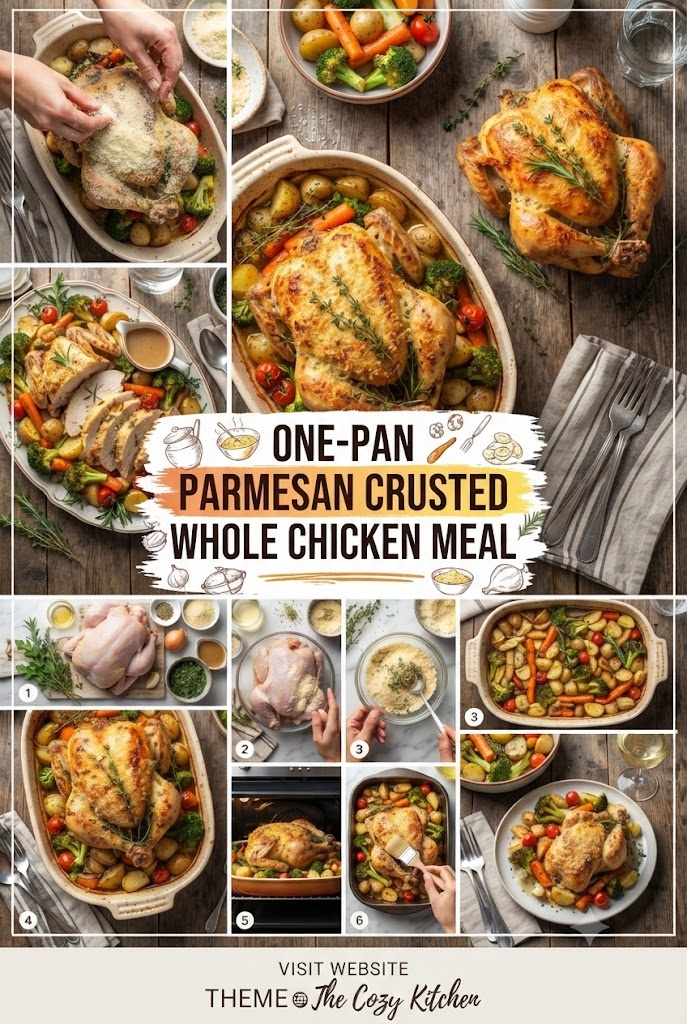
In the pantheon of home-cooked comfort foods, few dishes command the same respect and nostalgia as a perfectly roasted whole chicken. It is the centerpiece of the Sunday family dinner, a symbol of domestic warmth, and a testament to the cook’s skill. However, the modern kitchen demands more than just tradition; it demands efficiency, flavor profiles that pop, and, most importantly, minimal cleanup.
Enter the One-Pan Parmesan Crusted Whole Chicken Meal. This isn’t just a recipe; it’s a strategic approach to culinary excellence. By combining the savory, umami-rich punch of aged Parmesan cheese with the succulent, juicy interior of a slow-roasted bird—all while surrounding it with a medley of schmaltz-kissed root vegetables—you create a symphony of textures and tastes that rivals any high-end bistro.
In this comprehensive guide, we will explore the science of the crust, the art of the roast, and the secrets to making this your most-requested meal.
The Philosophy of the One-Pan Meal
The “One-Pan” movement is more than a trend; it is a response to the hectic pace of modern life. But “easy” should never mean “bland.” When you cook a whole chicken in a single pan with vegetables, you are utilizing a technique known as flavor layering. As the chicken roasts, its natural fats and juices (often called “liquid gold” or schmaltz) render out, basting the vegetables below. This creates a cohesive flavor profile that you simply cannot achieve when cooking components separately.
The addition of a Parmesan crust elevates the dish from a standard roast to a gourmet experience. The cheese provides a salty, nutty, and crunchy exterior that protects the meat from drying out while infusing the skin with an addictive texture.
Anatomy of the Ingredients: Quality is Key
To achieve a Google-ranked, restaurant-quality result, you must start with the best possible ingredients. Each component plays a vital role in the final outcome.
1. The Bird (The Star)
For a one-pan meal, aim for a 4 to 5-pound organic or pasture-raised whole chicken. These birds tend to have better fat distribution and a deeper flavor. Ensure the chicken is completely thawed and, most importantly, brought to room temperature for at least 30 to 45 minutes before it hits the oven. This ensures even cooking.
2. The Parmesan (The Secret Weapon)
Forget the green shaker can. For a true crust, you need Parmigiano-Reggiano or a high-quality aged Parmesan. Grate it yourself using a microplane or the fine side of a box grater. Freshly grated cheese contains more moisture and natural oils, which help it adhere to the chicken and brown beautifully without burning into a bitter mess.
3. The Aromatics
Inside the cavity of the chicken, we place the “engine room” of flavor.
- Lemon: Halved and poked with a fork to release oils.
- Garlic: An entire head, sliced crosswise.
- Fresh Herbs: Sprigs of rosemary, thyme, and sage.
4. The Pan Mates (The Supporting Cast)
You want vegetables that can withstand a 60 to 90-minute roasting time.
- Yukon Gold Potatoes: They hold their shape but get incredibly creamy inside.
- Carrots: Choose thick, heirloom varieties for sweetness.
- Brussels Sprouts or Asparagus: These can be added in the final 20 minutes to prevent overcooking.
The Science of the Parmesan Crust
Why does Parmesan make such a difference? It comes down to the Maillard Reaction. This is the chemical reaction between amino acids and reducing sugars that gives browned food its distinctive flavor. Parmesan is packed with glutamate, which provides that deep umami sensation. When combined with a small amount of panko breadcrumbs or almond flour (for a keto version), the cheese creates a structural matrix that traps steam inside the chicken, ensuring the breast meat remains moist even at high temperatures.
The “Glue”
To get the crust to stick, we use a compound butter or a high-quality mayonnaise base. While butter is traditional, mayonnaise (which is mostly oil and egg) is a secret weapon among professional chefs. It has a higher smoke point than butter and helps the Parmesan adhere perfectly to every nook and cranny of the bird.
Step-by-Step Guide to the Perfect One-Pan Roast
Phase 1: Preparation and Drying
The enemy of a crispy crust is moisture.
- Remove the chicken from its packaging and pat it dry with paper towels—inside and out.
- For the ultimate crunch, leave the chicken uncovered in the refrigerator for 2 hours (or overnight). This air-dries the skin.
Phase 2: Seasoning the Cavity
Generously salt the inside of the bird. Stuff it with the lemon halves, the halved garlic head, and the bunch of fresh herbs. This creates an aromatic steam that seasons the meat from the inside out.
Phase 3: Applying the Crust
In a medium bowl, mix:
- 1 cup freshly grated Parmesan cheese
- ½ cup Panko breadcrumbs (optional)
- 2 tablespoons melted butter or mayonnaise
- 1 teaspoon smoked paprika (for color)
- 1 tablespoon chopped fresh parsley
- ½ teaspoon cracked black pepper
Slather the chicken with a thin layer of olive oil or butter first, then press the Parmesan mixture firmly onto the breast and legs.
Phase 4: Arranging the Pan
Place the chicken in the center of a large roasting pan or a heavy 12-inch cast-iron skillet. Surround the chicken with your chopped vegetables. Toss the vegetables in olive oil, salt, pepper, and a little bit of the remaining Parmesan. Ensure the vegetables are in a single layer so they roast rather than steam.
Phase 5: The Roasting Process
- Preheat your oven to 425°F (220°C). A high initial heat helps set the crust.
- Place the pan in the oven and roast for 15 minutes.
- Lower the heat to 375°F (190°C). This allows the chicken to cook through to the bone without burning the cheese crust.
- Roast for approximately 20 minutes per pound. A 4lb bird usually takes about 1 hour and 15 minutes to 1 hour and 30 minutes total.
- The Internal Temp: Use a meat thermometer. The thickest part of the thigh should register 165°F (74°C).
Master Tips for Success
The Resting Period
Do not—under any circumstances—cut into the chicken immediately. If you do, all the juices will run out onto the cutting board, leaving the meat dry. Transfer the chicken to a warm plate and let it rest for at least 15 to 20 minutes. This allows the muscle fibers to relax and reabsorb the juices.
Avoiding “Soggy Bottom” Vegetables
If your vegetables are looking too watery halfway through, it’s likely because the pan is overcrowded. Use a larger pan or remove some of the liquid with a turkey baster. You want the vegetables to fry in the chicken fat, not boil in the chicken juice.
The Basting Rule
Normally, you baste a roast chicken. However, with a Parmesan crust, you should avoid basting the top. Pouring liquid over the crust will make it soggy. Instead, if the vegetables look dry, toss them gently in the pan juices without touching the chicken’s crown.
Dietary Variations
The Keto/Low-Carb Version
To make this 100% Keto-friendly, simply omit the panko breadcrumbs. Use only Parmesan and perhaps some crushed pork rinds for extra crunch. Swap the potatoes for cauliflower florets, radishes (which taste like potatoes when roasted!), or zucchini.
The Dairy-Free Alternative
While “Parmesan” is in the name, you can achieve a similar effect using nutritional yeast mixed with cashew flour and sea salt. It provides a cheesy, nutty profile that satisfies dairy-free requirements.
The Spicy Kick
Add a teaspoon of red pepper flakes or a pinch of cayenne to the Parmesan mixture. The heat pairs beautifully with the richness of the cheese.
Why This Recipe Ranks: The Nutritional Profile
In an era of health-conscious eating, a Parmesan-crusted chicken meal offers a balanced nutritional profile. It is high in protein, rich in essential minerals like Zinc and Vitamin B12, and provides healthy fats.
- Protein: Essential for muscle repair and satiety.
- Parmesan: A great source of calcium and easier to digest than softer cheeses due to its aging process.
- Vegetables: Provide the necessary fiber and antioxidants.
By roasting the vegetables in the chicken fat, you are also consuming monounsaturated fats (if using olive oil) and natural animal fats that aid in the absorption of fat-soluble vitamins (A, D, E, and K) found in the carrots and herbs.
Pairing the Meal: Drinks and Sides
While this is a one-pan meal, the right beverage can elevate the dining experience.
Wine Pairings
- Chardonnay: Look for an oaked California Chardonnay. The buttery notes of the wine complement the Parmesan crust perfectly.
- Pinot Noir: If you prefer red, a light-bodied Pinot Noir has the acidity to cut through the richness of the chicken skin.
- Sauvignon Blanc: The herbal notes of the wine mirror the rosemary and thyme in the pan.
Non-Alcoholic Pairings
- Sparkling Apple Cider: The crisp acidity cleanses the palate between bites of savory chicken.
- Lemon-Infused Sparkling Water: Mimics the citrus inside the bird’s cavity.
Troubleshooting Common Issues
1. The crust is browning too fast: If the Parmesan looks like it’s going from golden to dark brown before the chicken is done, loosely tent the bird with aluminum foil. This deflects direct heat while allowing the internal temperature to continue rising.
2. The breast meat is dry but the thighs are undercooked: This is the classic chicken dilemma. To prevent this, always roast the chicken breast-side up and ensure you don’t overcook it. Taking the bird out at 160°F and letting it “carry-over cook” to 165°F during the rest period is the pro move.
3. The potatoes are still hard: Potatoes take longer than chicken sometimes. Cut your potatoes into smaller 1-inch cubes to ensure they soften at the same rate the chicken cooks.
Beyond the First Meal: Leftover Magic
A whole roasted chicken is the gift that keeps on giving. Never throw away the carcass or the leftover meat.
- The Bones: Simmer the carcass with celery, onions, and water for 4 hours to create a rich, Parmesan-infused bone broth.
- The Meat: Leftover Parmesan chicken is incredible in a Caesar salad. The crust acts like built-in croutons.
- The Vegetables: Mash any leftover roasted potatoes and carrots into a “bubble and squeak” for breakfast the next morning, topped with a poached egg.
Summary of the Method
For those looking for a quick reference, here is the essential workflow:
- Dry the chicken thoroughly.
- Stuff the cavity with aromatics (garlic, lemon, herbs).
- Coat with a fat (butter or mayo) and the Parmesan-herb mixture.
- Surround with hardy root vegetables tossed in oil.
- Roast at 425°F for 15 mins, then 375°F until the internal temp hits 165°F.
- Rest for 20 minutes before carving.
Final Thoughts
The One-Pan Parmesan Crusted Whole Chicken Meal is more than just a dinner; it is a kitchen triumph. It proves that you don’t need a sink full of dishes or a degree from a culinary institute to produce a meal that looks and tastes like a masterpiece. By focusing on the quality of your cheese, the dryness of your chicken skin, and the timing of your roast, you create a dish that is deeply satisfying, visually stunning, and nutritionally complete.
Whether you are cooking for a quiet Wednesday night or hosting a festive Sunday gathering, this recipe stands as a beacon of flavor and simplicity. The crunch of the Parmesan, the fragrance of the roasted garlic, and the tenderness of the chicken will ensure this becomes a staple in your culinary repertoire for years to come.