
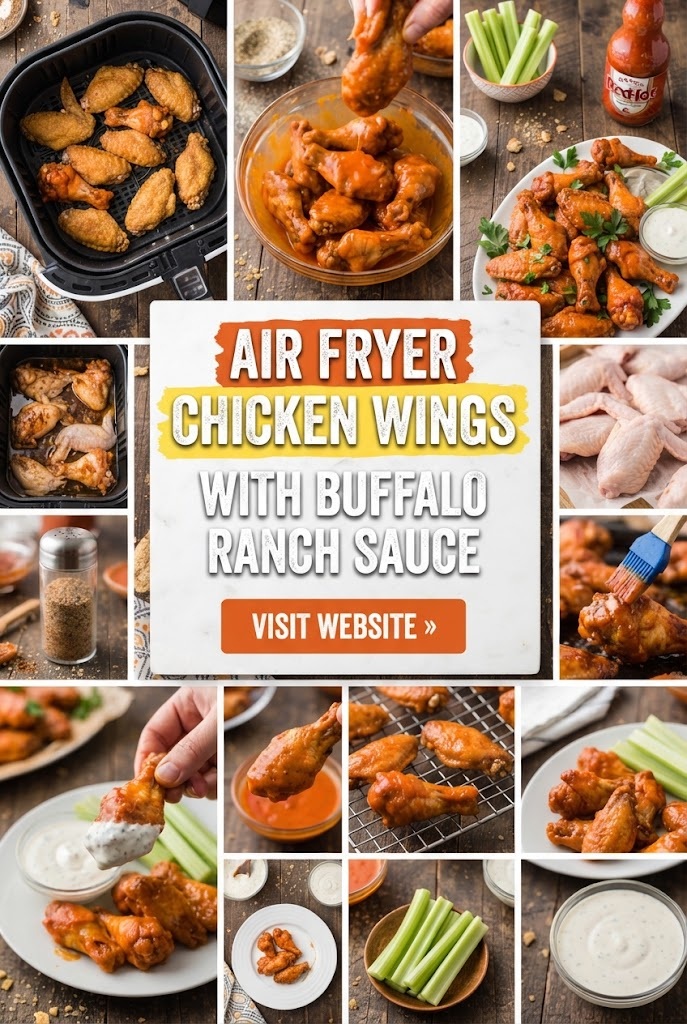
When the craving for something crispy, spicy, and satisfying hits, few dishes can rival the iconic chicken wing. For decades, the chicken wing has reigned supreme as the king of game-day appetizers, the hero of dive bar menus, and the ultimate comfort food. However, the traditional method of deep-frying wings at home often comes with a host of downsides: the lingering smell of hot oil, the dangerous splatters, the messy cleanup, and, of course, the high calorie count.
Enter the air fryer—a kitchen revolution that has fundamentally changed how we approach “fried” foods. By utilizing rapid air technology, the air fryer delivers that coveted crunch without the vat of oil. Today, we are diving deep into the definitive recipe for Air Fryer Chicken Wings paired with a velvety, zesty Buffalo Ranch Sauce. This isn’t just a recipe; it’s a masterclass in achieving restaurant-quality results in your own kitchen for an easy, mouthwatering dinner tonight.
Why the Air Fryer is the Superior Wing Machine
If you are still on the fence about whether the air fryer lives up to the hype, chicken wings will be the dish that converts you. To understand why air-fried wings are superior, we have to look at the science of the cook.
Convection Power
An air fryer is essentially a high-powered countertop convection oven. It features a concentrated heating element and a powerful fan that circulates hot air at high speeds around the food. In a standard oven, moisture can get trapped around the chicken, leading to steaming rather than searing. In an air fryer, the constant movement of air whisks away moisture instantly, allowing the fat in the chicken skin to render and “fry” the exterior.
Healthier Indulgence
Traditional deep-frying submerges chicken in oil, which the skin absorbs. Air frying requires little to no additional oil. Since chicken wings are naturally high in fat, they essentially “self-fry.” You get the same golden-brown, shatteringly crisp skin with up to 80% less fat than traditional methods.
Efficiency and Speed
Preheating a large oven takes time. Heating up a gallon of oil takes even longer. An air fryer reaches temperature in minutes. Because the cooking chamber is small and the airflow is intense, wings cook significantly faster than they would in a conventional oven, making this the perfect “easy dinner” solution.
Selecting Your Wings: Quality Matters
Before you even turn on the air fryer, the success of your dinner depends on the quality of your bird. Not all wings are created equal.
Fresh vs. Frozen
Whenever possible, opt for fresh chicken wings. Fresh wings contain less internal moisture than those that have been frozen and thawed. Excess moisture is the enemy of crispiness. If you must use frozen wings, ensure they are completely thawed in the refrigerator and, most importantly, patted bone-dry with paper towels before seasoning.
Flats vs. Drummies
The “wing” is typically broken down into three parts: the drumette (which looks like a miniature drumstick), the wingette (the flat part with two bones), and the tip. Most people prefer a mix of drumettes and flats.
- Drumettes: Meatier and easier to eat with one hand.
- Flats (Wingettes): Often considered the connoisseur’s choice because they have a higher skin-to-meat ratio, leading to more crunch.
Organic and Air-Chilled
If your budget allows, look for “air-chilled” chicken. Most commercial chicken is water-chilled, which means the meat absorbs extra water during processing. Air-chilled chicken is cooled with cold air, resulting in a more concentrated chicken flavor and skin that crisps up much more effectively.
The Secret Science of the Extra-Crispy Wing
If you’ve ever wondered why restaurant wings have that specific “crunch” that seems impossible to replicate at home, there is a secret ingredient you likely already have in your pantry: Baking Powder.
The Role of pH
Adding a small amount of aluminum-free baking powder to your dry rub is a game-changer. Baking powder is alkaline. When applied to chicken skin, it raises the pH level. This breakdown of the proteins in the skin allows it to brown more quickly and become more brittle (in a good way).
Carbon Dioxide Bubbles
As the baking powder heats up, it creates tiny carbon dioxide bubbles on the surface of the skin. These bubbles increase the surface area of the wing, creating more nooks and crannies for the hot air to hit. The result is a textured, bubbly, and incredibly crunchy crust that mimics the texture of a deep-fried wing.
Note: Ensure you use baking powder, NOT baking soda. Baking soda has a strong metallic taste that will ruin the wings.
Ingredients for the Ultimate Air Fryer Wings
To make this easy dinner tonight, gather the following ingredients. This recipe is designed for approximately 2 pounds of wings, which serves 2-4 people depending on appetite.
For the Wings:
- 2 lbs Chicken Wings: Split into flats and drumettes.
- 1 tbsp Aluminum-Free Baking Powder: The secret to the crunch.
- 1 tsp Kosher Salt: To enhance the natural flavors.
- 1/2 tsp Garlic Powder: For a savory baseline.
- 1/2 tsp Onion Powder: For depth of flavor.
- 1/4 tsp Black Pepper: Freshly ground is best.
- 1/4 tsp Smoked Paprika: For a hint of color and wood-fired essence.
For the Buffalo Ranch Sauce:
- 1/3 cup Buffalo Hot Sauce: Frank’s RedHot is the classic choice, but feel free to use your favorite cayenne-based sauce.
- 1/4 cup High-Quality Ranch Dressing: Use a thick, creamy version (hidden valley or homemade).
- 2 tbsp Unsalted Butter: Melted (this adds the classic Buffalo silkiness).
- 1 tsp Honey or Maple Syrup: Just enough to balance the acidity and heat.
- 1/2 tsp Dried Parsley: For a pop of color and herbiness.
Step-by-Step Instructions: The Path to Perfection
Follow these steps meticulously to ensure your wings come out perfect every single time.
Step 1: Prep and Dry
Remove the wings from their packaging. Use several layers of paper towels to pat them thoroughly dry. Do not skip this step! Any moisture left on the skin will turn into steam, resulting in rubbery wings. Let them sit on the counter for about 10-15 minutes to reach room temperature; this ensures even cooking.
Step 2: The Seasoning Toss
In a large mixing bowl, combine the baking powder, salt, garlic powder, onion powder, black pepper, and smoked paprika. Whisk until well blended. Add the dried wings to the bowl and toss vigorously until every wing is evenly coated in a light dusting of the powder mixture.
Step 3: Arrange in the Basket
Preheat your air fryer to 360°F (180°C). Lightly grease the air fryer basket with a high-smoke-point oil spray (like avocado or grapeseed oil). Arrange the wings in a single layer. Crucial Tip: Do not overcrowd the basket. The air needs to circulate around each individual wing. If you have a smaller air fryer, cook in two batches.
Step 4: The Initial Render
Cook the wings at 360°F for 15 minutes. Halfway through (at the 7-8 minute mark), pull the basket out and shake it or use tongs to flip the wings. This initial lower temperature allows the fat to render out slowly without burning the skin.
Step 5: The High-Heat Crisp
Once the 15 minutes are up, increase the temperature of the air fryer to 400°F (200°C). Cook for another 5-10 minutes, shaking the basket every few minutes. This final blast of high heat is what creates the golden-brown color and the “shatter-crisp” texture.
Step 6: Prepare the Buffalo Ranch Sauce
While the wings are finishing their high-heat cycle, whisk together the Buffalo hot sauce, melted butter, ranch dressing, honey, and dried parsley in a small bowl. The ranch acts as a cooling agent and adds a creamy tang that elevates the standard Buffalo sauce.
Step 7: The Toss
Once the wings are done, remove them from the air fryer and place them immediately into a clean, large bowl. Pour the Buffalo Ranch Sauce over the hot wings and toss until fully coated. The heat from the wings will help the sauce adhere to the skin.
Deep Dive: The Buffalo Ranch Flavor Profile
Why does Buffalo Ranch work so well? It’s all about the balance of the four pillars of flavor: Salt, Fat, Acid, and Heat.
- Heat: The cayenne pepper in the Buffalo sauce provides a sharp, vinegar-forward heat that stimulates the palate.
- Acid: The vinegar in the hot sauce and the buttermilk/sour cream notes in the ranch provide the acidity needed to cut through the richness of the chicken fat.
- Fat: The butter and the oil/egg base of the ranch provide a coating that lingers on the tongue, mellowing out the spice and making the wings feel indulgent.
- Salt: Salt enhances everything, ensuring the chicken doesn’t taste flat.
By mixing the ranch directly into the sauce rather than just using it as a dip, you create a more cohesive flavor experience. Each bite gives you the zing of Buffalo and the cooling comfort of Ranch simultaneously.
Variations and Customizations
One of the best things about air fryer wings is their versatility. Once you master the base technique, you can experiment with different flavors.
The “Dry Rub” Enthusiast
If you prefer your wings without a wet sauce, you can lean into the dry rub. Increase the smoked paprika, add some brown sugar for caramelization, or throw in some cayenne and cumin for a southwestern flair. The baking powder trick works for dry rubs too!
Extra Spicy (The “Inferno” Wing)
If you are a “chili-head,” swap the standard Buffalo sauce for a habanero or ghost pepper-based sauce. Add a pinch of cayenne or red chili flakes to the ranch mixture to maintain that spicy-to-creamy ratio.
Lemon Pepper Buffalo
A popular trend in wing spots is the “Lemon Pepper Wet” style. Add a teaspoon of lemon pepper seasoning to your Buffalo Ranch sauce for a citrusy, zesty kick that brightens the entire dish.
Garlic Parmesan Buffalo
Melt an extra tablespoon of butter with two cloves of minced garlic. Mix this into your Buffalo Ranch sauce and finish the wings with a heavy dusting of freshly grated Parmesan cheese.
Dietary Considerations
Keto and Low-Carb
This recipe is naturally keto-friendly! Since we aren’t using flour or heavy breading, the carb count remains very low. Just ensure your ranch dressing doesn’t have added sugars, and use a keto-approved sweetener if you choose to add the “honey” element (or omit it entirely).
Gluten-Free
As long as your baking powder and hot sauce are certified gluten-free, this recipe is a safe and delicious option for those with Celiac disease or gluten sensitivities.
Dairy-Free
To make this dairy-free, substitute the butter with a vegan butter alternative or coconut oil, and use a dairy-free ranch dressing (often made with an avocado oil or cashew base).
The Best Sides to Serve with Wings
While wings can certainly stand alone as a meal, the right sides turn “easy dinner night” into a feast.
The Classics: Celery and Carrots
There’s a reason these are the standard. The watery crunch of celery and the sweetness of carrots provide a much-needed textural contrast to the soft meat and crispy skin. They also act as “palate cleansers” between spicy bites.
Air Fryer Potato Wedges
Since your air fryer is already out, why not make some fries? Slice russet potatoes into wedges, toss them with olive oil and salt, and air fry them at 400°F for 15-20 minutes. They are the perfect vessel for soaking up any leftover Buffalo Ranch sauce.
A Crisp Wedge Salad
A cold, crisp iceberg wedge salad topped with blue cheese crumbles, bacon, and more ranch dressing creates a “steakhouse” vibe that pairs beautifully with the heat of the wings.
Sweet Potato Fries
The sweetness of the potatoes offers a lovely counterpoint to the salty, spicy wings. Serve them with a side of maple-mustard dip.
Tips for Hosting a Wing Party
If you’re making these for a group, timing is everything.
- Batch Cooking: You can cook several batches of wings in advance. Keep the cooked wings on a wire rack set over a baking sheet in a 200°F oven. This keeps them warm and prevents the bottoms from getting soggy.
- Sauce at the Last Minute: Never sauce your wings until you are ready to serve. Even the crispiest air-fried wing will eventually succumb to the moisture in the sauce.
- The “Bone Bowl”: Always provide a large, empty bowl on the table for discarded bones. It’s a small detail that makes the dining experience much cleaner.
- Wet Naps: Buffalo wings are a contact sport. Have plenty of napkins or even some lemon-scented wet wipes available for your guests.
Common Mistakes to Avoid
Even with an easy recipe, there are pitfalls that can lead to mediocre wings. Avoid these at all costs:
- Using Too Much Baking Powder: If you over-coat the wings, you will taste the baking powder. It should be a very light, almost invisible dusting.
- Using Cold Wings: If you put wings straight from the fridge into the air fryer, the internal temperature won’t rise evenly, and the skin won’t crisp as effectively.
- Crowding the Basket: This is the #1 mistake. If the wings are touching or overlapping, the air can’t reach those spots. You’ll end up with “bald spots” of soggy skin.
- Not Shaking the Basket: Shaking the basket redistributes the heat and ensures the wings don’t stick to the grates.
- Using High-Sugar Sauces Too Early: If you want to use a BBQ sauce or a sauce with high sugar content, do NOT put it on before air frying. The sugar will burn and turn bitter before the chicken is cooked. Always sauce at the end.
Cleaning and Maintenance of Your Air Fryer
To ensure your wings always taste their best, you must keep your equipment clean. Chicken wings render a lot of fat, which can accumulate in the bottom tray.
- Clean After Every Use: Once the air fryer has cooled, wash the basket and tray with warm, soapy water. Most air fryer baskets are dishwasher safe, but hand-washing often preserves the non-stick coating longer.
- The Deep Clean: Every few months, check the heating element (the coil at the top). If grease has splattered onto it, it can cause smoking. Wipe it down with a damp cloth and a bit of dish soap when the unit is unplugged and completely cool.
- Deodorizing: If your air fryer starts to smell like old oil, place a small oven-safe dish with lemon juice and vinegar inside and “cook” it at 400°F for 5 minutes. This will neutralize lingering odors.
Troubleshooting Rubbery Skin
If you followed the instructions and your skin is still rubbery, check the following:
- Was the chicken truly dry? Use more paper towels next time.
- Is your air fryer losing heat? If the fan is dusty or the seals are old, it might not be circulating air efficiently.
- Did you use enough salt? Salt helps draw out moisture from the skin during the cooking process.
Storage and Reheating
If you happen to have leftovers (a rare occurrence with this recipe!), here is how to handle them.
Storage
Store leftover wings in an airtight container in the refrigerator for up to 3 days.
Reheating for Maximum Crunch
Never use the microwave to reheat wings. It will turn the skin into a rubbery mess. Instead, put the wings back into the air fryer at 375°F for 4-5 minutes. This will re-crisp the skin and heat the meat through without overcooking it. If the wings were already sauced, they won’t be quite as crispy as day one, but the air fryer will still do a much better job than an oven or microwave.
Frequently Asked Questions
Can I use this recipe for boneless wings?
Yes, but the timing will change significantly. Boneless wings are usually made from breast meat, which cooks much faster and dries out easily. Air fry boneless wings at 400°F for about 10-12 minutes, flipping halfway through.
Is it necessary to flip the wings?
Yes. Even with the best airflow, the side of the wing touching the basket will not get as much air as the top. Flipping ensures 360-degree crunch.
Can I put parchment paper in the air fryer?
You can use perforated parchment paper designed for air fryers. However, avoid standard parchment paper that blocks all the holes, as this defeats the purpose of the air circulation. Never put parchment paper in without food on top, or the fan will blow it into the heating element and cause a fire.
How do I know when the wings are done?
While the golden-brown color is a good indicator, the safest way is to use an instant-read meat thermometer. Chicken wings are safe at 165°F, but they actually taste better when cooked to 185°F-190°F. Because wings have a lot of connective tissue, the higher temperature allows that tissue to break down, resulting in “fall-off-the-bone” meat.
Final Thoughts: The Joy of the Perfect Wing
There is something deeply satisfying about a plate of perfectly cooked wings. They are fun to eat, full of bold flavors, and perfect for sharing. By using the air fryer, you’ve turned a “cheat meal” into a sustainable, easy weeknight dinner that doesn’t compromise on quality or taste.
The combination of the baking powder-induced crunch and the creamy, spicy Buffalo Ranch sauce creates a culinary harmony that will have your family asking for “Wing Wednesday” every week. So, skip the takeout, avoid the greasy mess of the deep fryer, and let your air fryer do the heavy lifting. You’re just 30 minutes away from the best chicken wings you’ve ever had.
Whether it’s a Tuesday night dinner or a Sunday afternoon football game, these wings are guaranteed to be the star of the show. Grab your air fryer, prep your wings, and get ready for a flavor explosion. Bon appétit!