
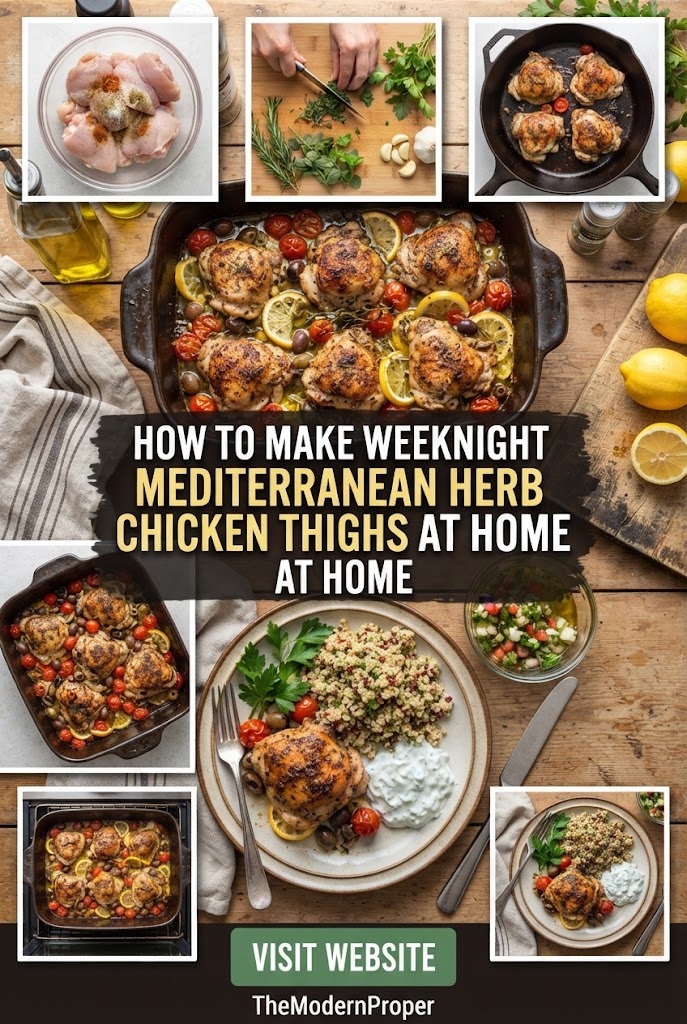
In the realm of home cooking, few dishes strike the perfect balance between rustic simplicity and gourmet elegance quite like Mediterranean Herb Chicken Thighs. This dish is the quintessential weeknight savior—a recipe that requires minimal effort but delivers a profound explosion of flavor. It captures the essence of the sun-drenched Mediterranean coastline, combining the brightness of citrus, the earthiness of ancient herbs, and the succulent richness of perfectly roasted poultry.
Whether you are a seasoned chef or a beginner looking to impress, mastering the art of the chicken thigh is a rite of passage. Unlike the lean and often unforgiving chicken breast, the thigh is resilient, juicy, and packed with flavor-carrying fats. When infused with a traditional Mediterranean palette, it transforms into a meal that is as healthy as it is indulgent.
Why Chicken Thighs are the Unsung Hero of the Mediterranean Diet
The Mediterranean diet is globally renowned for its health benefits, focusing on lean proteins, healthy fats, and an abundance of herbs. While fish often takes center stage, chicken—specifically the thigh—plays a vital role in traditional village cooking from Greece to Southern Italy and Spain.
The Superiority of the Dark Meat
Chicken thighs contain a higher concentration of myoglobin, the protein that delivers oxygen to muscles, which gives the meat its darker color and richer flavor. This higher fat content isn’t just about calories; it’s about moisture. Thighs are incredibly forgiving in the oven. Even if you leave them in for five minutes too long, they remain succulent, whereas a breast would become dry and fibrous.
Nutritional Powerhouse
When prepared with the Mediterranean method—using extra virgin olive oil, fresh garlic, and antioxidant-rich herbs—chicken thighs become a nutritional powerhouse. They provide essential B vitamins, zinc, and iron, all while staying within the parameters of a heart-healthy dietary pattern.
The Mediterranean Flavor Palette: Understanding Your Ingredients
To create a masterpiece, you must first understand your tools. The Mediterranean flavor profile relies on a specific set of “foundation” ingredients that work in harmony to create a balanced profile of acid, fat, and aromatics.
1. The Gold Standard: Extra Virgin Olive Oil (EVOO)
In this recipe, olive oil is not just a cooking medium; it is a primary flavoring agent. Use a high-quality, cold-pressed EVOO. It provides a peppery, fruity base that carries the flavors of the herbs deep into the meat.
2. The Acid: Lemon Juice and Zest
Lemon serves two purposes. The juice acts as a mild tenderizer, breaking down surface proteins to allow flavors to penetrate. The zest, however, contains the essential oils that provide that signature “bright” Mediterranean aroma. Always zest your lemon before juicing it.
3. The Aromatics: Garlic, Garlic, and More Garlic
Fresh garlic is non-negotiable. Avoid the pre-minced jars, which often have a bitter, metallic aftertaste. Freshly smashed or minced garlic cloves release allicin, providing a pungent, spicy kick that mellows into sweetness as the chicken roasts.
4. The Herb Trio: Oregano, Rosemary, and Thyme
- Oregano: The backbone of Greek and Italian cooking. It offers a slightly bitter, camphoraceous note.
- Rosemary: Its piney, woody aroma pairs perfectly with the charred skin of the chicken.
- Thyme: Provides a subtle, earthy floral note that ties the citrus and garlic together.
Essential Equipment for the Perfect Roast
You don’t need a professional kitchen to make world-class chicken, but a few specific tools will make the process seamless.
- Cast Iron Skillet: This is the gold standard for chicken thighs. It holds heat beautifully, allowing you to sear the skin to a perfect golden-brown crisp before transferring it to the oven.
- Meat Thermometer: To ensure juiciness, you want to pull the chicken when it hits an internal temperature of 165°F (74°C).
- Microplane: For zesting lemons and grating garlic into a fine paste.
- Large Mixing Bowl: For marinating and ensuring every inch of the chicken is coated.
The Master Recipe: Weeknight Mediterranean Herb Chicken Thighs
Ingredients
- Chicken: 6 to 8 bone-in, skin-on chicken thighs (approx. 2.5 – 3 lbs).
- Oil: 1/4 cup extra virgin olive oil.
- Citrus: 1 large lemon (zested and juiced).
- Garlic: 5 cloves, minced.
- Dried Herbs: 1 tbsp dried oregano, 1 tsp dried thyme.
- Fresh Herbs: 2 sprigs of fresh rosemary (chopped) and fresh parsley for garnish.
- Seasoning: 1.5 tsp sea salt, 1 tsp cracked black pepper, 1/2 tsp smoked paprika (for color and depth).
- Vegetables (Optional for Sheet Pan): Red onion wedges, cherry tomatoes, and Kalamata olives.
Step-by-Step Instructions
1. Preparation and Patting Dry
The secret to crispy skin starts before the heat is even turned on. Remove your chicken from the refrigerator 20 minutes before cooking to take the chill off. Use paper towels to pat the skin extremely dry. Moisture is the enemy of crispiness; if the skin is damp, it will steam rather than sear.
2. The Infusion (The Marinade)
In a small bowl, whisk together the olive oil, lemon juice, lemon zest, minced garlic, oregano, thyme, rosemary, salt, pepper, and smoked paprika.
Place the chicken thighs in a large bowl or a heavy-duty Ziploc bag. Pour the marinade over the chicken, ensuring you get some under the skin as well. Let this sit for at least 30 minutes, or up to 4 hours in the refrigerator. Note: Do not marinate longer than 6 hours, as the acid in the lemon juice will begin to “cook” the meat and change its texture.
3. The Sear (The Secret Step)
Preheat your oven to 400°F (200°C). Heat your cast iron skillet over medium-high heat with a teaspoon of oil. Once the pan is shimmering, place the chicken thighs skin-side down. Do not crowd the pan; cook in batches if necessary. Let them sear undisturbed for 5-7 minutes. You are looking for a deep, golden-brown crust.
4. The Roast
Flip the chicken thighs so they are skin-side up. If you are adding vegetables like onions or olives, scatter them around the chicken pieces in the skillet. Transfer the skillet directly into the preheated oven.
Roast for 20-25 minutes. The high heat of the oven will finish cooking the meat through while the rendered fat from the skin continues to “fry” the top, creating a glass-like crunch.
5. The Rest
This is the most skipped, yet most important step. Remove the skillet from the oven and transfer the chicken to a warm plate. Let it rest for 5 to 10 minutes. This allows the juices to redistribute throughout the meat. If you cut into it immediately, all that flavorful juice will run out onto the plate, leaving you with dry meat.
Elevating the Dish: Variations and Customizations
While the base recipe is a classic, the Mediterranean region is diverse. You can easily tweak this recipe to travel to different countries via your palate.
The Greek Island Variation
Add 1/2 cup of crumbled Feta cheese and a handful of halved Kalamata olives during the last 5 minutes of roasting. Serve with a side of tzatziki (yogurt, cucumber, and garlic dip) and warm pita bread.
The Southern Italian Twist
Swap the rosemary for fresh basil (added at the end) and add a tablespoon of balsamic glaze. Roast the chicken alongside sliced bell peppers and zucchini for a “Cacciatore-adjacent” feel.
The Spanish “Pollo Al Ajillo” Style
Increase the garlic to 10 cloves and add 1 teaspoon of hot smoked paprika (Pimentón). Use dry sherry instead of lemon juice for a deeper, nuttier acidity.
Perfect Pairings: What to Serve with Your Chicken
To make this a complete Mediterranean feast, you need sides that complement the acidity and richness of the chicken.
1. Lemon Herb Roasted Potatoes
Since the oven is already on at 400°F, toss some halved baby gold potatoes in olive oil, salt, and more oregano. They can roast on a separate tray and will be ready at the same time as the chicken.
2. The Classic Greek Salad (Horiatiki)
A refreshing mix of cucumbers, tomatoes, red onions, olives, and feta. No lettuce is needed here—the juices from the vegetables mix with the olive oil and vinegar to create a natural dressing that cuts through the richness of the chicken skin.
3. Saffron Infused Couscous or Quinoa
For a lighter grain option, couscous takes only 5 minutes to prepare. Fluff it with a fork and stir in some toasted pine nuts and golden raisins for a North African Mediterranean touch.
4. Charred Broccolini or Asparagus
A quick sauté of green vegetables with lemon and red pepper flakes provides the necessary “green” element to the plate, balancing the meal’s macronutrients.
Pro Tips for the Crispiest Skin Imaginable
If you struggle with rubbery chicken skin, follow these three “Golden Rules”:
- Salt Early: Salting the skin at least 30 minutes before cooking draws out moisture through osmosis.
- Use a Rack: If you aren’t using a skillet, place the chicken on a wire rack set over a baking sheet. This allows hot air to circulate under the chicken, preventing the bottom from becoming soggy.
- The “Under-the-Skin” Technique: Gently lift the skin with your finger and slide a bit of the herb-garlic paste directly onto the meat. This seasons the meat while keeping the skin dry enough to crisp up.
The Science of Flavor: Why This Combination Works
Cooking is chemistry. The reason Mediterranean herb chicken is so universally loved lies in the interaction of its components.
- Fat (Olive Oil & Chicken Fat): Fat is a flavor carrier. Many of the aromatic compounds in rosemary and oregano are fat-soluble, meaning they need the oil to “bloom” and reach your taste buds.
- Acid (Lemon): Acid provides “brightness.” It stimulates salivation, which makes the flavors of the meat and herbs seem more intense.
- Salt: Salt doesn’t just make things salty; it suppresses bitterness and enhances the perception of sweetness and umami in the roasted chicken.
- Heat (Maillard Reaction): The browning of the chicken skin is the Maillard reaction—a chemical reaction between amino acids and reducing sugars that gives browned food its distinctive flavor.
Meal Prepping and Storage
This recipe is a meal-prepper’s dream. The flavors actually intensify after a day in the refrigerator.
- Fridge: Store leftovers in an airtight container for up to 4 days.
- Freezer: You can freeze the marinated raw chicken for up to 3 months. When you’re ready to eat, defrost it in the fridge overnight and cook as directed.
- Reheating: To maintain the crispy skin, avoid the microwave. Instead, place the chicken in a toaster oven or air fryer at 350°F for 5-8 minutes until warmed through and the skin re-crisps.
Frequently Asked Questions (FAQs)
Can I use boneless, skinless chicken thighs?
Yes, but you will need to adjust the cooking time. Boneless thighs cook much faster (usually 12-15 minutes in the oven). However, be aware that you will lose the texture of the crispy skin and some of the moisture that the bone provides.
Is this recipe Keto and Paleo friendly?
Absolutely. This recipe is naturally low-carb, high-protein, and uses healthy fats. It is perfect for anyone following a ketogenic, paleo, or whole30 lifestyle.
What if I don’t have fresh herbs?
Dried herbs are more concentrated than fresh. The general rule of thumb is 1 teaspoon of dried herbs for every 1 tablespoon of fresh. For this recipe, dried oregano and thyme work perfectly, but try to use fresh rosemary if possible, as the texture of dried rosemary can be quite “pine-needle-like.”
My garlic is burning in the skillet, what do I do?
If you are searing at a very high heat, the minced garlic can burn and turn bitter. To prevent this, you can use sliced garlic cloves instead of minced, or ensure the garlic is tucked mostly under the skin or mixed thoroughly into the oil before searing.
The Cultural Significance of the Sunday Roast
In many Mediterranean cultures, the act of roasting meat is a communal event. It signifies the transition from the busy work week to the sanctity of the weekend. While we call this a “weeknight” recipe because of its speed, it carries the soul of those long, slow Sunday lunches in the hills of Tuscany or the villages of Crete.
By bringing these scents—lemon, garlic, and rosemary—into your home, you aren’t just making dinner; you are participating in a culinary tradition that has sustained civilizations for millennia.
Troubleshooting Common Issues
Issue: The chicken is cooked but the skin isn’t crispy.
Solution: Turn on your broiler for the last 2-3 minutes of cooking. Watch it like a hawk, as the skin can go from golden to burnt in seconds.
Issue: The meat is tough.
Solution: This usually happens if the chicken was cooked straight from the freezer or if it didn’t rest. Ensure the chicken reaches room temperature before cooking and always give it that 5-minute rest period.
Issue: The lemon flavor is too overpowering.
Solution: Balance it with a pinch of sugar or a drizzle of honey in the marinade. This will counteract the sharp acidity without removing the citrus aroma.
Final Thoughts: Bringing the Mediterranean Home
The Weeknight Mediterranean Herb Chicken Thigh is more than just a recipe; it’s a philosophy of cooking. It teaches us that you don’t need expensive ingredients or complex techniques to create a meal that is healthy, satisfying, and deeply flavorful.
The combination of high-quality fats, fresh aromatics, and the reliable chicken thigh creates a foundation that you can build upon for years to come. Once you master the sear and the roast, you can experiment with different herbs, various citrus fruits, and an array of seasonal vegetables.
Tonight, skip the takeout and the complicated multi-step recipes. Reach for the olive oil, grab a lemon, and let the oven do the heavy lifting. Your kitchen will smell like a Mediterranean villa, and your taste buds will thank you.
Summary Checklist for Success:
- Pat the chicken dry for maximum crunch.
- Zest the lemon for aromatic depth.
- Sear skin-side down in a hot cast iron skillet.
- Don’t crowd the pan to avoid steaming.
- Use a meat thermometer to hit 165°F perfectly.
- Rest the meat to lock in those succulent juices.
By following this comprehensive guide, you are well on your way to mastering one of the most versatile and beloved dishes in the Mediterranean repertoire. Enjoy the process, and more importantly, enjoy the feast!