
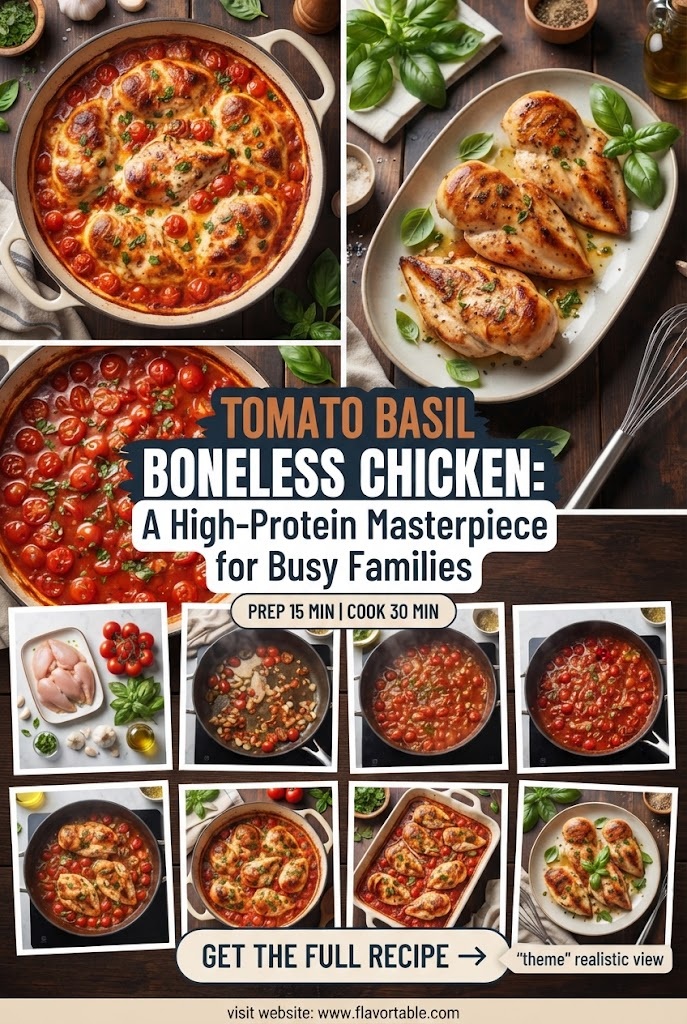
In the fast-paced modern world, the dinner table remains one of the few places where families can reconnect. However, the pressure to deliver a meal that is simultaneously healthy, delicious, and quick can be overwhelming. Enter the Tomato Basil Boneless Chicken. This isn’t just another chicken recipe; it is a nutritional powerhouse designed to satisfy fitness enthusiasts and picky toddlers alike.
With its vibrant colors, Mediterranean-inspired aromatics, and lean protein profile, this dish has become a staple in American households looking for “gourmet-lite” options. In this comprehensive guide, we will explore why this recipe works, the science of its flavors, and how you can master it in your own kitchen regardless of your cooking skill level.
Why This Recipe is a Game-Changer for Busy Families
The struggle for the average American family isn’t just about time; it’s about quality. We live in an era of processed convenience, but the health consequences of “fast food” at home are becoming more apparent. The Tomato Basil Boneless Chicken bridges the gap between convenience and nutrition.
1. High Protein for Maximum Satiety
Protein is the building block of the body. For growing children, it supports development; for active adults, it aids in muscle recovery and metabolic health. By using boneless, skinless chicken breasts or thighs, this recipe provides a high-protein punch without the excessive saturated fats found in red meats or fried alternatives.
2. Time-Efficient Preparation
Most busy parents have a “30-minute window” to get food on the table before the evening chaos ensues. This recipe utilizes techniques that maximize flavor in minimal time. By using boneless cuts, the cooking time is slashed significantly compared to bone-in poultry.
3. Nutrient Density
Beyond the protein, the inclusion of fresh tomatoes and basil introduces a wealth of vitamins and antioxidants. Tomatoes are famous for lycopene, an antioxidant linked to heart health and skin protection, while basil offers anti-inflammatory properties.
The Core Ingredients: Quality Matters
To achieve a restaurant-quality result at home, you must understand your ingredients. Let’s break down the components of the perfect Tomato Basil Boneless Chicken.
The Protein: Chicken Selection
- Chicken Breasts: The gold standard for “high protein, low fat.” When cooked correctly, they are tender and juicy.
- Chicken Thighs: If you prefer a richer flavor and a more forgiving meat (thighs are harder to overcook), boneless thighs are an excellent substitute.
- Organic vs. Conventional: While conventional chicken is more budget-friendly, organic or pasture-raised chicken often has a firmer texture and a more “chicken-forward” taste.
The Aromatics: Garlic and Shallots
Never underestimate the power of your base. Sautéing minced garlic and finely diced shallots in a bit of olive oil creates a foundation of flavor that permeates the meat.
The Star: Tomatoes
- Fresh Cherry Tomatoes: These are preferred for their sweetness and the way they “burst” to create a natural sauce.
- Canned San Marzano: If fresh tomatoes aren’t in season, high-quality canned plum tomatoes (crushed by hand) provide a deep, umami-rich base.
The Herb: Fresh Basil
Dried basil does not work here. To get that signature Italian-inspired aroma, you need fresh Genovese basil. The oils in fresh basil are volatile and provide a peppery, sweet finish that defines the dish.
The Science of Flavor: Why Tomato and Basil?
The pairing of tomato and basil is a culinary classic, but there is science behind why it works so well. Tomatoes are high in glutamates, the compounds responsible for the “umami” or savory taste. Basil contains estragole and linalool, which provide sweet and floral notes.
When you sear the chicken (the Maillard reaction), you create complex sugars and savory compounds on the surface of the meat. When these elements combine with the acidity of the tomatoes and the herbal brightness of the basil, you achieve a “balanced palate”—hitting sweet, sour, salty, and savory notes all at once.
Step-by-Step Cooking Guide: The Master Method
This method focuses on the stovetop-to-oven technique, which ensures the chicken is seared perfectly while remaining juicy on the inside.
Equipment Needed
- Large cast-iron skillet or heavy-bottomed stainless steel pan.
- Meat thermometer (crucial for protein precision).
- Chef’s knife and cutting board.
Ingredients List (Serves 4)
- 1.5 lbs Boneless Skinless Chicken Breasts (pounded to even thickness)
- 2 cups Cherry Tomatoes (halved)
- 1 cup Fresh Basil Leaves (chiffonade or torn)
- 4 cloves Garlic (minced)
- 1 large Shallot (finely chopped)
- 2 tbsp Extra Virgin Olive Oil
- 1 tbsp Balsamic Glaze (optional, for acidity)
- Salt and Black Pepper to taste
- Optional: Fresh Mozzarella pearls for a “Caprese” twist.
Instructions
1. Preparation and Seasoning
Start by patting the chicken dry with paper towels. Moisture is the enemy of a good sear. Season generously with salt and pepper on both sides. If the breasts are very thick, use a meat mallet to pound them to a uniform 1/2 inch thickness. This ensures they cook evenly.
2. The Sear
Heat the olive oil in your skillet over medium-high heat. Once the oil shimmers, add the chicken. Do not crowd the pan; cook in batches if necessary. Sear for 5–6 minutes per side until a golden-brown crust forms. Remove the chicken and set aside on a plate (it won’t be fully cooked yet).
3. Building the Sauce
In the same pan (don’t wash it! those brown bits are “fond” and contain massive flavor), drop the heat to medium. Add the shallots and garlic. Sauté for 2 minutes until fragrant. Toss in the cherry tomatoes with a pinch of salt. The salt will help draw out the moisture.
4. The “Burst” Phase
Cover the pan for 3–4 minutes. The steam will cause the tomatoes to soften and eventually burst. Use the back of a wooden spoon to gently crush them, releasing their juices to create a rustic sauce.
5. Finishing the Chicken
Place the chicken and any accumulated juices back into the pan, nesting them into the tomato mixture. Lower the heat, cover, and simmer for another 5–8 minutes.
6. The Final Flourish
Once the chicken reaches an internal temperature of 165°F (74°C), turn off the heat. Stir in the fresh basil and a drizzle of balsamic glaze. The residual heat will wilt the basil just enough to release its fragrance without turning it bitter.
Variations for Different Dietary Needs
One of the reasons this Tomato Basil Boneless Chicken recipe is a “Google-ranked” favorite in the USA is its incredible versatility. You can adapt it to almost any diet.
The Keto/Low-Carb Version
This recipe is naturally low-carb. To keep it strictly Keto, ensure you use a sugar-free balsamic or skip the glaze entirely. Serve it over zoodles (zucchini noodles) or steamed cauliflower instead of pasta.
The Dairy-Free/Paleo Option
The base recipe is already dairy-free. To add creaminess without milk, stir in a tablespoon of coconut cream or use a splash of cashew milk at the end of the sauce-making process.
The “Family-Style” Casserole (Baked Version)
If you prefer a hands-off approach, place the raw seasoned chicken in a 9×13 baking dish. Top with the garlic, shallots, and tomatoes. Bake at 400°F (200°C) for 20–25 minutes. Toss in the basil right before serving. This is ideal for those nights when you need to disappear and do laundry while dinner cooks.
Meal Prep Secrets: How to Make it Last All Week
In the USA, meal prepping is a survival skill for busy professionals. Tomato Basil Boneless Chicken is one of the best recipes for reheating because the tomato sauce keeps the chicken moist.
- Fridge Storage: Store in airtight glass containers for up to 4 days.
- Freezer Instructions: You can freeze the cooked chicken and sauce together. Ensure it is completely cooled before sealing. It stays fresh for up to 3 months.
- Reheating Tip: Avoid the microwave if possible. Reheat in a small skillet on the stove with a tablespoon of water or chicken broth to revive the sauce. If using a microwave, use 50% power to prevent the chicken from becoming “rubbery.”
What to Serve With Tomato Basil Chicken
To make this a complete meal, you need the right sides. Depending on your health goals, here are three ways to plate it:
1. The Classic Italian Way
Serve the chicken and sauce over a bed of al dente Angel Hair pasta or Linguine. The thin noodles soak up the tomato juices perfectly. Add a side of garlic bread to mop up the remaining sauce.
2. The Fitness-Focused Way
Pair the chicken with Quinoa or Brown Rice. These complex carbohydrates provide long-lasting energy. Add a side of roasted asparagus or steamed broccoli for extra fiber.
3. The Light & Fresh Way
Serve the chicken sliced over a large Arugula salad. The peppery bite of the arugula complements the sweetness of the tomatoes and the richness of the chicken.
Troubleshooting Common Mistakes
Even the simplest recipes can go wrong. Here is how to avoid common pitfalls:
- Dry Chicken: This is almost always caused by overcooking. Invest $15 in a digital meat thermometer. Pull the chicken off the heat at 160°F; the “carryover cooking” will bring it to the safe 165°F while resting.
- Bland Sauce: If the sauce tastes “flat,” it likely needs more acidity. A squeeze of fresh lemon juice or a teaspoon of red wine vinegar can brighten the entire dish.
- Watery Sauce: If your tomatoes were very juicy and the sauce is too thin, remove the chicken and turn the heat to high for 2 minutes to reduce the liquid into a thicker glaze.
The Nutritional Breakdown (Per Serving)
For those tracking macros, here is what a typical serving (approx. 6oz chicken + sauce) looks like:
- Calories: 280–320
- Protein: 35g – 42g
- Total Fat: 9g (mostly healthy monounsaturated fats from olive oil)
- Carbohydrates: 8g – 12g (mostly from fiber and natural sugars in tomatoes)
- Sodium: Dependent on seasoning, but significantly lower than restaurant versions.
Kid-Friendly Hacks: Getting the Little Ones to Eat
If your children are wary of “green bits” (basil) or “chunks” (tomatoes), try these modifications:
- The Blend Method: After cooking the sauce but before adding the chicken back in, run the tomato/garlic mixture through a blender. It becomes a smooth “pizza-style” sauce that most kids adore.
- The Cheese Blanket: Top the chicken with a slice of Provolone or a handful of Mozzarella and broil for 2 minutes until bubbly. Everything is better with melted cheese.
- Chicken Tenders Style: Use the same flavor profile but use boneless chicken tenders instead of large breasts. The smaller size is often less intimidating for toddlers.
Sourcing the Best Ingredients in the USA
For American home cooks, the quality of your grocery store can change the outcome.
- Farmers Markets: During summer months, getting “Heirloom” tomatoes will elevate this dish to a 5-star level.
- Trader Joe’s/Whole Foods: Look for their “Balsamic Glaze” and “Organic Air-Chilled Chicken.” Air-chilled chicken has less water weight, meaning it sears better and tastes more concentrated.
- Costco: If you are cooking for a large family, Costco’s bulk organic chicken breasts and large containers of cherry tomatoes make this an incredibly cost-effective meal, coming in at under $3 per serving.
Exploring the Cultural Roots: A Mediterranean Influence
While “Tomato Basil Boneless Chicken” is a modern American weeknight favorite, its heart lies in the Mediterranean diet—widely considered the healthiest diet in the world. This diet emphasizes lean proteins, heart-healthy fats (olive oil), and a high intake of vegetables and herbs.
By adopting this recipe, you aren’t just making dinner; you are participating in a culinary tradition that prioritizes longevity and heart health. In regions like Tuscany or the Amalfi Coast, similar dishes (like Pollo alla Pizzaiola) have been served for generations. The American version simplifies the process by using boneless cuts, making it accessible for the 21st-century lifestyle.
Elevating the Dish: Wine and Beverage Pairings
If you’re serving this for a date night or a weekend family dinner, the right drink can enhance the flavors.
- White Wine: A crisp Sauvignon Blanc or a Pinot Grigio. The acidity in these wines cuts through the richness of the olive oil and complements the tomato’s tang.
- Red Wine: If you prefer red, go for a light-bodied Chianti or Pinot Noir. Avoid heavy, tannic reds like Cabernet Sauvignon, as they can overwhelm the delicate basil.
- Non-Alcoholic: A Sparkling Water with a wedge of Lime or an Iced Herbal Tea (like Hibiscus) provides a refreshing contrast to the savory garlic and chicken.
The Environmental Impact: Sustainable Cooking
Choosing boneless chicken is also a step toward more sustainable eating patterns when compared to beef. Poultry has a significantly lower carbon footprint and requires less water and land per pound of protein produced. To further your commitment to sustainability:
- Buy local produce to reduce “food miles.”
- Use the leftover chicken carcasses (if you buy whole and de-bone them yourself) to make a high-protein bone broth.
- Compost your tomato tops and basil stems to give back to the earth.
Frequently Asked Questions (FAQ)
Can I use frozen chicken?
Yes, but ensure it is completely thawed in the refrigerator before cooking. Pat it extra dry, as frozen chicken tends to release more water, which can prevent a good sear.
What if I don’t have fresh basil?
While fresh is best, the closest substitute is a high-quality Basil Pesto. Stir in a tablespoon of pesto at the very end instead of using fresh leaves.
Is this recipe gluten-free?
Absolutely. As long as you don’t serve it with traditional wheat pasta, the core recipe is 100% gluten-free.
How do I keep the garlic from burning?
Garlic burns quickly and turns bitter. Always add it after the shallots have softened, and keep the heat at medium. If the pan seems too hot, add a splash of chicken broth or water to instantly lower the temperature.
Conclusion: Make Tonight a Tomato Basil Night
The Tomato Basil Boneless Chicken is more than just a recipe; it is a solution. It solves the “what’s for dinner” dilemma with a high-protein, low-effort, and high-reward meal that feels like a treat. By focusing on fresh ingredients, proper searing techniques, and the timeless combination of tomato and basil, you can provide your family with a meal that supports their health and satisfies their taste buds.
Whether you are a fitness enthusiast looking to hit your macro goals, a busy parent juggling soccer practice and homework, or a home cook looking to expand your repertoire, this dish belongs in your weekly rotation. Simple, elegant, and packed with nutrition—this is the gold standard of modern American home cooking.
Pro Tip: Always make a double batch. The leftovers make for an incredible “Tomato Basil Chicken Wrap” for lunch the next day!