There is a specific kind of magic that happens in a heavy-bottomed pot on a Sunday afternoon when the windows are slightly fogged from the cold and the kitchen smells like simmering celery and thyme. If you grew up anywhere near the Mason-Dixon line—or even if you didn’t—you likely have a core memory of a bowl of chicken and dumplings. It isn’t just a meal; it’s a culinary hug. It’s the dish people request when they’re feeling under the weather, when they’ve had a long week, or when they just need to feel grounded.
Southern Chicken and Dumplings is a polarizing topic in the best way possible. Depending on which county or state you hail from, those “dumplings” might look very different. You have the “slickers”—thin, rolled-out squares of dough that are almost noodle-like. Then you have the “drop” dumplings—puffy, cloud-like mounds of dough that steam right on top of the broth. Today, we are leaning heavily into the drop dumpling camp. Why? Because there is something undeniably luxurious about a dumpling that is light and airy on the top but has soaked up all that golden chicken fat on the bottom.
This recipe isn’t about cutting corners. It’s about building layers of flavor. We’re talking about a broth so rich it coats the back of a spoon and chicken so tender it practically melts. If you’ve ever struggled with dumplings that turned out like lead sinkers or a broth that felt more like water, this guide is your roadmap to success.
What Makes This Recipe Truly Southern?
In the South, “authentic” usually means “made from scratch.” While you can certainly find versions that use canned biscuits or condensed cream of chicken soup, a true Southern masterpiece relies on a few key pillars: a rich mirepoix, bone-in chicken for the broth, and a buttermilk-based dumpling dough.
The secret lies in the fat. Whether it’s the rendered fat from the chicken skin or a healthy knob of high-quality butter, that fat carries the flavor of the herbs—sage, thyme, and black pepper—throughout the entire pot. We also use a touch of heavy cream at the very end to give the broth that signature ivory glow, though the starch from the dumplings themselves does most of the thickening work.
The Essential Ingredient List
To make a soup this soulful, you need ingredients that bring their A-game. Here is a breakdown of what you’ll need to gather before you start the stove.
For the Chicken and Broth
- Whole Chicken or Bone-In Thighs: Using meat on the bone is non-negotiable for a deep flavor. I prefer a mix of thighs and breasts for a balance of juicy dark meat and lean white meat.
- The Mirepoix: Yellow onions, crisp celery, and sweet carrots. This is the aromatic foundation of the soup.
- Garlic: Use fresh cloves. The jarred stuff won’t give you that sharp, savory punch we need.
- Chicken Stock: While we are making a “quick” stock as we simmer the chicken, starting with a high-quality store-bought or homemade base stock adds an extra layer of complexity.
- Herbs: Fresh thyme and a bay leaf are the classic duo. If you have fresh parsley, save that for the garnish.
- Butter: Salted or unsalted works, but we’ll use it to sauté the vegetables to give them a head start on sweetness.
For the Pillowy Dumplings
- All-Purpose Flour: This provides the structure. Make sure you measure it correctly (spoon and level!) so the dumplings don’t get too dense.
- Baking Powder: Our leavening agent. This is what makes the dumplings rise and become fluffy.
- Buttermilk: The acidity in buttermilk reacts with the baking powder to create air pockets, while the fat adds richness.
- Cold Butter: Cutting small bits of cold butter into the flour is a trick borrowed from biscuit making. It ensures the dumplings stay tender.
- Salt and Pepper: A bland dumpling is a tragedy. We season the dough itself.
Choosing the Right Kitchen Equipment
You don’t need a professional kitchen to pull this off, but a few specific tools will make the process much smoother.
- A Large Dutch Oven: This is the MVP of the recipe. A heavy-bottomed cast iron or enameled pot retains heat evenly, which is crucial when you drop the dumplings into the simmering liquid. You want something that holds at least 6 to 7 quarts.
- A Sharp Chef’s Knife: For all that dicing of onions and celery.
- A Pastry Blender or Two Forks: To cut the butter into the flour for the dumplings.
- A Large Slotted Spoon: Essential for removing the chicken from the hot broth to shred it.
- A Cookie Scoop: If you want perfectly uniform drop dumplings, a medium-sized spring-loaded scoop is a game-changer.
Step-by-Step Instructions: Mastering the Technique
Phase 1: Building the Golden Base
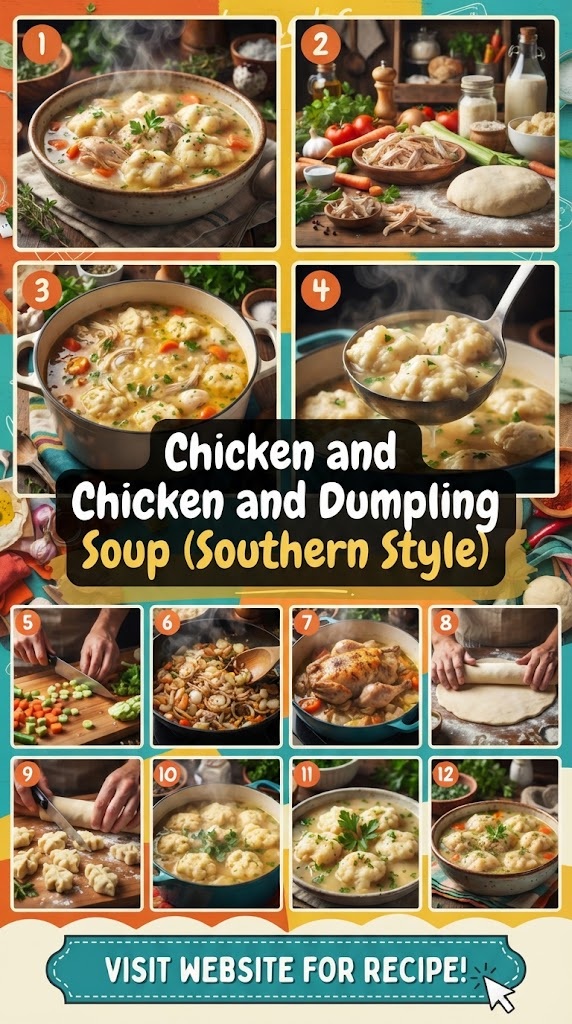
Start by heating your Dutch oven over medium heat. Add a tablespoon of oil and your butter. Once the butter is foaming, add your chicken pieces, skin-side down. We aren’t trying to cook them all the way through yet; we just want to render some fat and get a little golden color on the skin. This “fond” at the bottom of the pot is pure liquid gold.
Remove the chicken and set it aside. In that same fat, toss in your diced onions, carrots, and celery. Sauté them until the onions are translucent and the carrots have softened slightly. Stir in your minced garlic and cook for just another minute until the aroma fills the room.
Phase 2: Simmering the Bird
Pour in your chicken stock and use a wooden spoon to scrape up all those browned bits from the bottom. Place the chicken back into the pot, ensuring it’s mostly submerged. Add your thyme sprigs and the bay leaf.
Bring the mixture to a gentle boil, then immediately reduce the heat to a low simmer. Cover the pot. You want the chicken to poach slowly. This keeps the meat incredibly moist. Let it simmer for about 25 to 30 minutes, or until the chicken registers 165°F at the thickest part.
Phase 3: The Shred
Using your slotted spoon, carefully fish out the chicken pieces and transfer them to a large cutting board or bowl. Let them cool for a few minutes so you don’t burn your fingers. Discard the skin and bones, and shred the meat into bite-sized chunks. Avoid making the pieces too small; you want hearty chunks of chicken in every bite.
While the chicken is cooling, take a moment to taste your broth. This is your chance to adjust the salt and pepper. Remember, the dumplings will absorb some of the salt, so don’t be afraid to season it well.
Phase 4: Mixing the Dumpling Dough
This is the most critical stage. In a medium bowl, whisk together your flour, baking powder, salt, and pepper. Use a pastry cutter to incorporate the cold butter until the mixture looks like coarse crumbs.
Slowly pour in the buttermilk. Use a fork to gently fold the mixture together. Stop mixing the moment the flour is moistened. If you overwork the dough, the gluten will develop, and your dumplings will turn out rubbery instead of light and airy. The dough should be slightly sticky and shaggy.
Phase 5: The Drop and the Steam
Bring your broth back up to a very gentle simmer. Stir the shredded chicken back into the pot. Now, using your cookie scoop or two spoons, drop rounded tablespoons of the dough directly onto the surface of the simmering liquid.
Space them out as much as possible, though they will inevitably touch as they expand. Once all the dough is in, cover the pot with a tight-fitting lid.
Now, here is the hard part: Do not peek! For the next 12 to 15 minutes, the dumplings need to steam. If you lift the lid, the steam escapes, the temperature drops, and your dumplings might collapse or stay raw in the middle.
Phase 6: The Finishing Touch
After 15 minutes, remove the lid. The dumplings should be puffed up and look dry on the surface. To be sure, you can poke one with a toothpick; it should come out clean.
If you like a creamier soup, this is when you stir in a half-cup of heavy cream, moving gently so you don’t break the dumplings. Garnish with a handful of fresh chopped parsley for a pop of color and freshness.
Chef’s Tips for Success
- Don’t Rush the Veggies: Sautéing the mirepoix until it’s soft and fragrant is what gives the broth its depth. If you just boil the vegetables, the soup will taste “thin.”
- Keep the Butter Cold: For the dumplings, cold butter is essential. As the dumplings cook, those tiny bits of butter melt and create steam vents, which helps with the “fluff factor.”
- Temperature Control: The broth should be simmering, not a rolling boil, when you add the dumplings. A violent boil will break the dumplings apart before they have a chance to set.
- The Toothpick Test: If you aren’t sure if the dumplings are done, use a toothpick. If it comes out with wet dough, give them another 2-3 minutes with the lid back on.
Common Mistakes to Avoid
- Over-crowding the Pot: If you have too many dumplings for the surface area of your pot, they will stack on top of each other and the ones on top won’t cook through. Use a wide pot!
- Using All White Meat: While chicken breast is great, using only breast meat can lead to a drier result. Including some dark meat (thighs) adds essential fat and flavor to the broth.
- Peeking Under the Lid: I cannot stress this enough. The steam is what cooks the top of the dumpling. Every time you lift the lid, you’re resetting the “oven” inside the pot.
- Over-mixing the Dough: This is the #1 reason for “tough” dumplings. Stir until just combined. Lumps are okay!
Flavor Variations to Try
While the classic version is hard to beat, you can certainly put your own spin on this dish:
- The “Pot Pie” Twist: Add frozen peas and corn along with the shredded chicken for a vegetable-heavy version that tastes like a deconstructed pot pie.
- Herb-Infused Dumplings: Mix a tablespoon of chopped fresh chives or dill directly into the dumpling dough for an extra layer of herbal flavor.
- Spicy Southern: Add a pinch of cayenne pepper or a dash of hot sauce to the broth to give it a subtle back-end heat.
- Leek and Mushroom: Substitute half the onions for sliced leeks and add sautéed cremini mushrooms for an earthy, umami-rich variation.
Storing and Reheating Instructions
Chicken and dumplings is one of those rare dishes that might even taste better the next day as the flavors continue to meld. However, storage requires a little care.
Storage: Store leftovers in an airtight container in the refrigerator for up to 3 to 4 days. Keep in mind that the dumplings will continue to soak up the broth as they sit.
Reheating: When you go to reheat it, you’ll likely find that the broth has turned into a thick gravy. Add a splash of chicken broth or water to the pot before heating it on the stove over medium-low heat. Stir very gently to avoid smashing the dumplings. I don’t recommend the microwave for this dish, as it can make the dumplings rubbery.
Freezing: You can freeze the soup, but be warned: the texture of the dumplings will change. They tend to become a bit softer and more porous after being frozen and thawed. If you plan to freeze it, I suggest freezing the chicken and broth base and making fresh dumplings when you’re ready to eat.
Best Side Dishes to Serve
Since this is a very starch-heavy meal, you want sides that provide a bit of contrast—either through acidity or crunch.
- A Crisp Green Salad: A simple vinaigrette-dressed salad with radishes and cucumbers helps cut through the richness of the creamy broth.
- Roasted Green Beans: Tossed with garlic and lemon, these provide a nice snap and brightness.
- Collard Greens: If you want to go full Southern, a side of smoky, vinegary collard greens is the traditional companion.
- Cranberry Sauce: It might sound like a holiday-only side, but the tartness of cranberry sauce pairs beautifully with the savory chicken.
The Science of the Dumpling: Why They Float
Have you ever wondered why these little dough balls float? It’s a combination of the leavening agent and the steam. The baking powder creates carbon dioxide bubbles as soon as it hits the heat. Those bubbles get trapped in the gluten structure of the flour. Because air is less dense than the liquid broth, the dumplings rise to the top. As they steam, the proteins in the flour and buttermilk set, locking those air bubbles in place and creating that light, spongy texture we crave.
Troubleshooting Your Broth
Is your broth too thin? If your dumplings didn’t release enough starch to thicken the soup to your liking, don’t panic. You can make a quick “slurry” by mixing a tablespoon of cornstarch with two tablespoons of cold water. Drizzle it into the simmering broth (around the dumplings) and stir gently. It will thicken up in about 60 seconds.
Is your broth too salty? If you over-seasoned, add a peeled, halved potato to the pot for 10 minutes. The potato will absorb some of the excess salt. Alternatively, a splash of heavy cream or a teaspoon of sugar can help balance out an overly salty profile.
Frequently Asked Questions
Can I use canned biscuits for the dumplings? You can, but the texture will be different. Canned biscuits are much denser and saltier. If you’re in a massive hurry, it’s a popular “hack,” but once you taste the buttermilk drop dumplings from scratch, you’ll never want to go back.
What is the difference between a “slick” and a “drop” dumpling? Slick dumplings (also called “pastry” style) are rolled out thin and cut into squares. They are dense and chewy, like thick noodles. Drop dumplings are made from a batter-like dough and are light, airy, and puffy. This recipe focuses on the drop style.
Can I make this in a slow cooker? Yes! Cook the chicken and vegetables on low for 6-7 hours. Two hours before serving, shred the chicken and return it to the pot. Drop the dumpling dough onto the top, turn the slow cooker to “High,” and cook for about 60-90 minutes with the lid on.
Why are my dumplings raw in the middle? This usually happens if the dumplings were dropped in too large of a clump or if the lid was removed too early. It can also happen if the broth wasn’t hot enough to create the necessary steam.
Can I use a rotisserie chicken? Absolutely! To save time, you can skip the poaching step. Sauté your veggies, add your broth, stir in the shredded rotisserie chicken, and proceed straight to making and dropping the dumplings. You’ll lose a little bit of that deep “homemade stock” flavor, but it’s a fantastic weeknight shortcut.
Should I use milk or buttermilk? While regular milk works, buttermilk is superior. The acidity reacts better with the baking powder, leading to a much fluffier dumpling. If you don’t have buttermilk, you can make a substitute by adding a teaspoon of lemon juice or white vinegar to a cup of regular milk and letting it sit for 5 minutes.
Why did my dumplings dissolve? If your broth was at a violent, rolling boil when you added the dough, the mechanical action of the bubbles likely broke the dough apart before it could set. Always aim for a gentle simmer.
Conclusion
Making Southern Chicken and Dumplings is a lesson in patience and the beauty of simple ingredients. It’s a dish that asks you to slow down, to stay in the kitchen, and to wait for the steam to do its work. There is no feeling quite like lifting that lid after fifteen minutes of “no peeking” and seeing those beautiful, snowy-white mounds floating on a sea of golden broth.
Whether you’re feeding a crowd or just looking for a way to treat yourself on a rainy Tuesday, this recipe is a reliable classic that never goes out of style. It’s soulful, it’s filling, and it carries the legacy of generations of Southern cooks who knew that the best way to show love was through a hot bowl of soup. So, grab your Dutch oven, put on your favorite playlist, and get to simmering. Your house is about to smell incredible.