
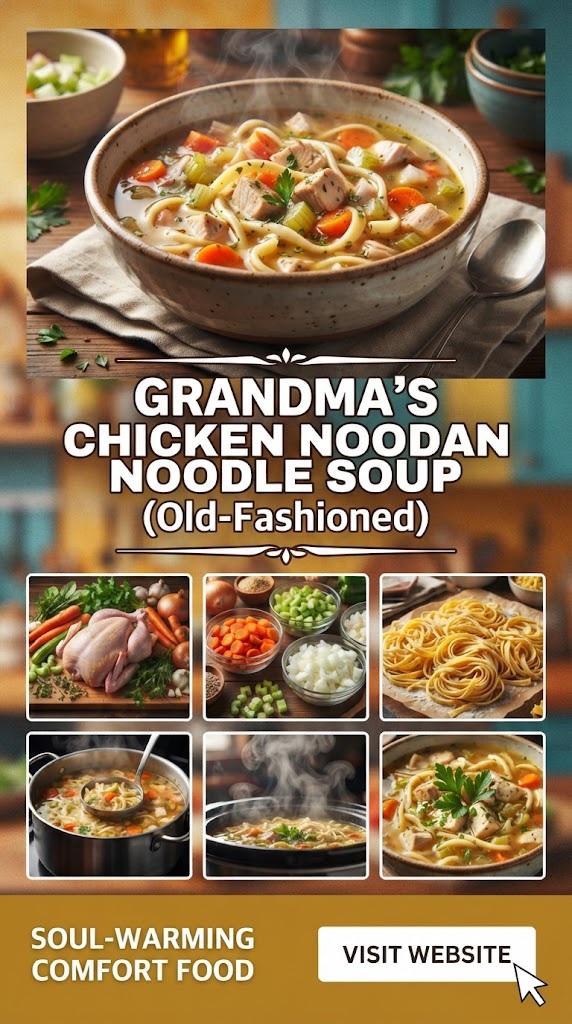
There are some recipes that feel like a warm hug in a bowl, and Grandma’s Chicken Noodle Soup is one of them. Made with tender chicken, hearty vegetables, flavorful broth, and comforting egg noodles, this old-fashioned soup is simple, nourishing, and deeply satisfying.
Unlike many quick soup recipes, this classic version takes a little extra time to build layers of flavor. The chicken is gently simmered with onion, carrots, celery, garlic, herbs, and broth until tender. The resulting stock becomes the foundation of a rich, homemade soup that tastes like it has been simmering in Grandma’s kitchen all afternoon.
Whether you are making soup for a chilly evening, a family Sunday dinner, or simply craving something comforting, this recipe is an excellent choice. It also makes a generous batch, so you can enjoy it for several meals or freeze some for later.
Why You’ll Love This Old-Fashioned Chicken Noodle Soup
This recipe has everything you want from a traditional chicken noodle soup.
- Rich homemade flavor: Simmering the chicken with vegetables and herbs creates a deeply flavorful broth.
- Tender chicken: Bone-in chicken adds wonderful flavor and produces juicy meat.
- Classic vegetables: Carrots, celery, and onion provide the traditional combination.
- Comforting noodles: Egg noodles make the soup hearty without making it overly heavy.
- Simple ingredients: Most of the ingredients are easy to find and inexpensive.
- Family-friendly: Kids and adults alike usually love the mild, comforting flavors.
- Excellent leftovers: The soup reheats beautifully, especially when the noodles are cooked separately.
- Freezer-friendly: The chicken and broth freeze well for future meals.
The secret is not complicated ingredients. It is slow, gentle cooking and good-quality ingredients.
Grandma’s Chicken Noodle Soup Recipe
Prep Time
20 minutes
Cook Time
1 hour 20 minutes
Total Time
1 hour 40 minutes
Servings
8 servings
Cuisine
American
Course
Soup / Main Course
Difficulty
Easy to Moderate
Ingredients
For the Chicken and Broth
- 2 ½ pounds bone-in, skin-on chicken thighs or a combination of thighs and breasts
- 10 cups chicken broth or chicken stock
- 3 cups water
- 1 large yellow onion, peeled and quartered
- 4 medium carrots, peeled and roughly chopped
- 4 celery stalks, roughly chopped
- 4 cloves garlic, lightly crushed
- 2 bay leaves
- 1 teaspoon dried thyme
- ½ teaspoon dried rosemary
- ½ teaspoon dried parsley
- 1 teaspoon whole black peppercorns
- 1 ½ teaspoons salt, plus more to taste
For the Soup
- 2 tablespoons butter or olive oil
- 1 medium yellow onion, finely diced
- 3 medium carrots, sliced into rounds
- 3 celery stalks, sliced
- 2 cloves garlic, minced
- 8 cups homemade chicken broth from the cooked chicken
- 3 cups shredded cooked chicken
- 2 cups wide egg noodles
- 1 teaspoon dried thyme
- ½ teaspoon dried parsley
- ¼ teaspoon black pepper
- Salt to taste
- 2 tablespoons fresh parsley, chopped
- 1 tablespoon fresh lemon juice, optional
Ingredient Notes
Chicken
Bone-in chicken is one of the best choices for this soup because the bones contribute flavor and body to the broth.
Chicken thighs are especially forgiving because they remain juicy after simmering. You can also use a whole chicken, chicken legs, or a combination of thighs and breasts.
If you prefer skinless chicken, that works too. The broth may simply be slightly lighter.
Chicken Broth
Homemade broth gives the soup the most traditional flavor, but good-quality store-bought chicken broth can absolutely be used.
If your broth is already salted, wait until the end before adding additional salt.
Carrots
Fresh carrots give the soup sweetness and color. Slice them relatively evenly so they cook at the same rate.
For a more rustic Grandma-style appearance, cut the carrots into thicker pieces.
Celery
Celery provides an important savory flavor. Don’t skip it unless absolutely necessary.
Onion
Onion forms the aromatic foundation of the soup. You will use onion both while preparing the chicken broth and again when building the finished soup.
Garlic
Traditional chicken noodle soup can be fairly mild, but a little garlic adds depth without overpowering the classic flavor.
Egg Noodles
Wide egg noodles are ideal. They cook quickly and have a soft, satisfying texture that works beautifully with chicken soup.
You can substitute homemade noodles, medium egg noodles, or another pasta if necessary.
Fresh Parsley
Fresh parsley added at the end brightens the entire soup. Dried parsley can be used, but fresh parsley gives the best finish.
How to Make Grandma’s Chicken Noodle Soup
Step 1: Prepare the Chicken
Place the chicken thighs or chicken pieces in a large soup pot or Dutch oven.
Add the chicken broth and water.
Then add:
- Quartered onion
- Roughly chopped carrots
- Roughly chopped celery
- Crushed garlic
- Bay leaves
- Thyme
- Rosemary
- Parsley
- Black peppercorns
- Salt
The chicken should be mostly submerged in the liquid.
Place the pot over medium-high heat and bring the liquid to a gentle boil.
As soon as it begins boiling, reduce the heat to low.
The goal is a gentle simmer, not an aggressive boil.
Step 2: Simmer the Chicken
Cover the pot partially with a lid and let the chicken simmer for approximately 45–60 minutes, depending on the size of the pieces.
During the first several minutes, you may notice foam rising to the surface.
Use a large spoon to skim away excessive foam.
This helps create a cleaner-looking broth.
The chicken is ready when it is completely cooked through and tender enough to pull apart easily.
If using a meat thermometer, chicken should reach an internal temperature of 165°F (74°C).
However, for soup, bone-in chicken often becomes even more tender when cooked beyond the minimum safe temperature.
Step 3: Remove the Chicken
Carefully transfer the cooked chicken to a large plate or bowl.
Allow it to cool enough to handle.
Once it is cool enough, remove the skin and bones.
Discard the bones and skin if you do not want to use them.
Shred or chop the chicken into bite-sized pieces.
Try not to shred the chicken too finely. Medium-sized pieces provide a better texture in the finished soup.
Set the chicken aside.
Step 4: Strain the Broth
Place a fine-mesh strainer over a large bowl or another clean pot.
Carefully strain the cooking liquid.
Discard the cooked vegetables, herbs, bay leaves, and peppercorns.
The strained broth should be golden and fragrant.
Taste it.
If necessary, add a little salt.
At this stage, you have a simple homemade chicken broth that forms the heart of the recipe.
Reserve about 8 cups for the soup.
Step 5: Start the Soup Base
Clean the soup pot and return it to the stove.
Add the butter or olive oil and heat over medium heat.
Add the finely diced onion, sliced carrots, and sliced celery.
Cook the vegetables for approximately 6–8 minutes.
Stir occasionally.
The onion should become soft and translucent while the carrots and celery begin to soften.
Do not rush this step.
Allowing the vegetables to gently cook in butter or oil helps develop their flavor before the broth is added.
Step 6: Add the Garlic
Add the minced garlic.
Cook for approximately 30–60 seconds.
Stir constantly.
Garlic burns quickly, so don’t leave it sitting at the bottom of the pot.
As soon as the garlic becomes fragrant, move to the next step.
Step 7: Add the Broth
Slowly pour the strained chicken broth into the pot.
Stir well, scraping the bottom of the pot with a wooden spoon.
Add:
- Dried thyme
- Dried parsley
- Black pepper
Bring the soup to a gentle simmer.
Allow the vegetables to cook for approximately 10–15 minutes, or until the carrots are nearly tender.
Step 8: Add the Chicken
Return the shredded chicken to the pot.
Stir gently.
Let the chicken warm through for approximately 5 minutes.
At this point, the soup should already smell incredible.
The broth will have a rich chicken aroma, the vegetables will be tender, and the shredded chicken will absorb some of the savory liquid.
Step 9: Cook the Egg Noodles
Add the egg noodles directly to the simmering soup.
Cook according to the package instructions, usually around 6–8 minutes.
Stir occasionally so the noodles do not stick together.
Be careful not to overcook them.
Egg noodles continue absorbing liquid as they sit, so cooking them only until tender is important.
For especially soft noodles, cook them slightly longer.
For firmer noodles, remove the soup from the heat as soon as the noodles reach your preferred texture.
Step 10: Taste and Adjust
This is the moment to make the soup taste like your own family recipe.
Taste the broth carefully.
Add additional salt if needed.
You can also add:
- More black pepper
- A little extra thyme
- Fresh parsley
- A small splash of lemon juice
The lemon juice is optional, but just a tiny amount can brighten a rich broth without making the soup taste lemony.
Don’t add too much.
The classic flavor should remain primarily chicken, vegetables, and herbs.
Step 11: Finish With Fresh Parsley
Turn off the heat.
Stir in the chopped fresh parsley.
Let the soup rest for about 5 minutes before serving.
This short resting period allows the flavors to settle and gives the noodles time to absorb some of the broth.
How to Serve Grandma’s Chicken Noodle Soup
Serve the soup hot in large bowls.
A little fresh parsley sprinkled over the top makes it look beautiful.
For a traditional family dinner, serve it alongside:
- Crusty French bread
- Homemade biscuits
- Garlic bread
- Dinner rolls
- Buttered toast
- Crackers
- Simple green salad
A warm piece of crusty bread is particularly good because it allows you to soak up the flavorful broth.
The Secret to Truly Flavorful Chicken Noodle Soup
The biggest difference between an ordinary chicken noodle soup and an exceptional one is usually the broth.
There are several ways to improve the flavor.
Use Bone-In Chicken
Bones contain collagen and contribute flavor to the cooking liquid.
Chicken thighs are especially useful because they stay moist during longer cooking.
Don’t Rush the Simmer
A gentle simmer gives the chicken time to release flavor into the broth.
A violent boil can make the chicken tougher and can also make the broth cloudy.
Cook the Vegetables Twice
Cooking vegetables during the initial broth stage extracts their flavor.
Cooking fresh vegetables again for the finished soup gives you vegetables with better texture.
That’s why this recipe uses two sets of vegetables.
Season Gradually
Different chicken broths contain different amounts of salt.
If you add too much salt at the beginning, you may end up with an overly salty soup.
Season gradually and taste near the end.
Add Fresh Herbs at the End
Fresh parsley has a bright flavor that can become muted if cooked for a long time.
Adding it after cooking gives the soup a fresher taste.
Should You Use Chicken Breast or Chicken Thighs?
Both work beautifully.
Chicken thighs
Chicken thighs are:
- Juicier
- More flavorful
- More forgiving
- Excellent for long simmering
Chicken breasts
Chicken breasts are:
- Leaner
- Mild in flavor
- Easy to shred
- A good choice if you prefer white meat
For the most traditional, rich soup, a mixture of thighs and breasts is an excellent option.
Can You Use Rotisserie Chicken?
Absolutely.
Using rotisserie chicken is one of the easiest shortcuts.
Simply remove the meat from the bones and shred it.
Then use good-quality chicken broth as your soup base.
For even more flavor, you can simmer the rotisserie chicken bones in the broth for 20–30 minutes before making the soup.
If the rotisserie chicken is heavily seasoned, taste the broth before adding salt.
How to Make This Soup With Homemade Noodles
If you have extra time, homemade noodles can turn this recipe into something truly special.
A simple homemade noodle dough can be made with:
- All-purpose flour
- Eggs
- Salt
- A small amount of water as needed
Roll the dough thinly, cut it into strips, and allow the noodles to dry for several minutes before adding them to the soup.
Fresh noodles cook much faster than dried noodles, so watch them carefully.
They may only require a few minutes.
How to Prevent Soggy Noodles
One of the biggest problems with chicken noodle soup is noodles becoming too soft after sitting in the refrigerator.
The noodles continue absorbing broth even after the soup has finished cooking.
For the best leftovers, consider cooking the noodles separately.
Cook the noodles in salted water until just tender.
Drain them.
Then place a portion of noodles into each bowl and ladle hot soup over them.
This method keeps the noodles from becoming overly soft.
It is especially useful if you plan to make the soup several days ahead.
Make-Ahead Instructions
Grandma’s chicken noodle soup is an excellent make-ahead meal.
For the best results, prepare the soup base without the noodles.
Cool it quickly and refrigerate it in a covered container.
When you’re ready to serve, reheat the soup gently on the stove.
Cook fresh noodles separately and add them to each bowl.
This produces a much better texture than refrigerating noodles in the broth.
Storage Instructions
Allow leftover soup to cool before refrigerating.
Transfer it to airtight containers.
Store in the refrigerator for approximately 3–4 days.
When reheating, place the soup in a saucepan over medium-low heat.
Stir occasionally.
Heat until steaming hot throughout.
Avoid repeatedly boiling the soup because excessive heat can make the chicken tough and the noodles overly soft.
Can You Freeze Chicken Noodle Soup?
Yes, but there is one important consideration: the noodles.
For the best frozen version, freeze the chicken and broth without noodles.
Once the soup has cooled, transfer it into freezer-safe containers.
Leave some room at the top because liquids expand as they freeze.
Freeze for up to approximately 3 months for the best quality.
When ready to eat, thaw the soup in the refrigerator overnight.
Reheat gently and prepare fresh egg noodles separately.
Add the noodles just before serving.
How to Reheat Frozen Soup
Place thawed soup into a large saucepan.
Heat over medium-low heat.
Stir occasionally.
If the broth seems concentrated after freezing, add a little water or additional chicken broth.
Taste and adjust the seasoning.
Cook fresh noodles separately and add them once the soup is hot.
Easy Variations
Creamy Chicken Noodle Soup
For a creamy version, add approximately ½–1 cup of heavy cream near the end.
Don’t boil aggressively after adding the cream.
You can also use half-and-half for a lighter creamy soup.
Lemon Chicken Noodle Soup
Add extra lemon juice and fresh parsley at the end.
The lemon gives the soup a brighter, fresher flavor.
Chicken Vegetable Noodle Soup
Add additional vegetables such as:
- Peas
- Corn
- Green beans
- Spinach
- Mushrooms
Add quick-cooking vegetables toward the end so they don’t become mushy.
Spicy Chicken Noodle Soup
For a little heat, add:
- Crushed red pepper flakes
- A pinch of cayenne
- Fresh jalapeño
- Hot sauce
Start with a small amount and increase gradually.
Herb-Loaded Chicken Noodle Soup
Add fresh thyme, parsley, and a small amount of rosemary.
Fresh herbs give the soup a garden-fresh flavor.
Common Mistakes to Avoid
Boiling the Chicken Too Hard
A rolling boil isn’t necessary.
Gentle simmering produces tender chicken and a cleaner broth.
Adding Noodles Too Early
If noodles cook for too long, they become mushy.
Add them toward the end.
Over-Salting
Always taste the broth before adding large amounts of salt.
Store-bought broth can already contain considerable sodium.
Cutting Vegetables Too Small
Very small vegetables can become mushy during cooking.
Medium slices give the soup a better texture.
Using Too Much Garlic
Garlic should complement the traditional chicken flavor, not dominate it.
Two to four cloves are usually enough.
Skipping the Resting Time
Letting the finished soup sit for a few minutes gives the flavors time to settle.
Tips for the Best Grandma-Style Flavor
1. Use a heavy pot
A Dutch oven or heavy-bottomed soup pot distributes heat evenly and reduces the chance of scorching.
2. Simmer slowly
Low and slow is better than aggressively boiling the chicken.
3. Use fresh vegetables
Fresh carrots, celery, and onion provide much better flavor and texture than canned alternatives.
4. Taste before serving
The final seasoning makes a huge difference.
5. Don’t overcook the noodles
They should be tender but still have enough structure to hold their shape.
6. Add fresh parsley
It gives the finished soup a beautiful color and fresh flavor.
7. Serve immediately
Chicken noodle soup is at its best when the broth is hot and the noodles are freshly cooked.
Frequently Asked Questions
Can I make this soup in a slow cooker?
Yes.
Place the chicken, broth, onion, carrots, celery, garlic, bay leaves, and herbs in the slow cooker.
Cook on LOW for approximately 6–7 hours or until the chicken is tender and fully cooked.
Remove and shred the chicken.
Return it to the slow cooker.
Cook the noodles separately and add them to individual bowls before serving.
This prevents the noodles from becoming overly soft.
Can I make it in an Instant Pot?
Yes.
Add the chicken, broth, vegetables, garlic, herbs, and seasonings to the pressure cooker.
Cook according to your pressure cooker’s recommended settings for chicken soup, then allow appropriate pressure release.
Remove and shred the chicken.
Return the chicken to the broth.
Cook the noodles separately or use the sauté function to cook them briefly in the finished soup.
Can I use leftover cooked chicken?
Definitely.
If you already have cooked chicken, simply skip the chicken-simmering step.
Prepare the vegetables in butter or olive oil, add chicken broth, seasonings, and vegetables, and simmer until tender.
Add the cooked chicken toward the end.
This makes a much faster version.
Can I use frozen vegetables?
Yes.
Frozen carrots, peas, corn, or mixed vegetables can work in a pinch.
Add them toward the end of cooking so they retain some texture.
Fresh vegetables will generally provide the most traditional flavor.
Why is my chicken noodle soup bland?
Bland soup usually needs more seasoning or a more flavorful broth.
Try adding a little salt, black pepper, thyme, parsley, or a tiny splash of lemon juice.
Also remember that noodles absorb some of the seasoning.
Taste again after adding them.
Why did my broth turn cloudy?
Cloudy broth is usually caused by vigorous boiling or proteins released from the chicken.
It is not necessarily a sign that the soup is bad.
For a clearer broth, simmer gently and skim foam from the surface during the early stages of cooking.
Straining the broth also helps.
Can I add potatoes?
Yes.
Diced potatoes make the soup heartier.
Add them with the carrots and celery and cook until fork-tender.
Keep in mind that potatoes can release starch into the broth and slightly change its texture.
Nutrition Information
Approximate nutrition per serving will vary depending on the chicken used, broth, noodles, and portion size.
A typical serving provides:
- Protein from chicken
- Carbohydrates from egg noodles
- Fiber and nutrients from vegetables
- Fat from chicken and butter or oil
- Sodium depending on the broth and added salt
For a lower-sodium version, use unsalted or low-sodium chicken broth and season the soup yourself.
Perfect Occasions for Chicken Noodle Soup
This soup isn’t just for cold weather.
It’s wonderful for:
- Family dinners
- Sunday lunch
- Cozy winter evenings
- Rainy days
- Meal prep
- Potlucks
- Family gatherings
- Holiday leftovers
- Busy weeknight meals
It’s also an excellent way to use leftover roast chicken.
Grandma’s Old-Fashioned Method
The beauty of this recipe is that it doesn’t rely on complicated techniques.
Grandma’s best cooking often followed a simple formula:
Start with good ingredients. Cook them slowly. Season carefully. Don’t rush.
That’s exactly what happens here.
The chicken creates the broth.
The vegetables create sweetness and savory depth.
The herbs add warmth.
The noodles provide comfort.
Fresh parsley brings everything together.
The finished soup doesn’t need complicated garnishes or fancy ingredients.
A steaming bowl and a piece of warm bread are enough.
Complete Recipe Card
Grandma’s Chicken Noodle Soup
Ingredients
Chicken and broth:
- 2 ½ pounds bone-in chicken thighs or mixed chicken pieces
- 10 cups chicken broth
- 3 cups water
- 1 large quartered onion
- 4 roughly chopped carrots
- 4 roughly chopped celery stalks
- 4 crushed garlic cloves
- 2 bay leaves
- 1 teaspoon dried thyme
- ½ teaspoon dried rosemary
- ½ teaspoon dried parsley
- 1 teaspoon black peppercorns
- 1 ½ teaspoons salt
Finished soup:
- 2 tablespoons butter or olive oil
- 1 diced onion
- 3 sliced carrots
- 3 sliced celery stalks
- 2 minced garlic cloves
- 8 cups strained chicken broth
- 3 cups shredded cooked chicken
- 2 cups wide egg noodles
- 1 teaspoon dried thyme
- ½ teaspoon dried parsley
- ¼ teaspoon black pepper
- Salt to taste
- 2 tablespoons fresh parsley
- 1 tablespoon lemon juice, optional
Directions
- Place chicken, broth, water, onion, carrots, celery, garlic, bay leaves, herbs, peppercorns, and salt into a large pot.
- Bring to a gentle boil.
- Reduce heat and simmer for 45–60 minutes.
- Remove the chicken and allow it to cool.
- Strain the broth and discard the cooked vegetables and herbs.
- Remove chicken skin and bones and shred the meat.
- Heat butter or oil in the cleaned pot.
- Add diced onion, sliced carrots, and celery.
- Cook for 6–8 minutes until the vegetables begin to soften.
- Add minced garlic and cook for 30–60 seconds.
- Pour in the strained broth.
- Add thyme, parsley, and black pepper.
- Simmer for 10–15 minutes.
- Return shredded chicken to the pot.
- Add egg noodles.
- Cook according to package directions until tender.
- Taste and adjust salt and pepper.
- Stir in fresh parsley.
- Add a small amount of lemon juice if desired.
- Rest for 5 minutes and serve hot.
Final Thoughts
Grandma’s Chicken Noodle Soup is the kind of recipe that proves comfort food doesn’t have to be complicated. A pot of chicken, vegetables, herbs, broth, and noodles can become something incredibly satisfying when you give the ingredients enough time to develop their flavor.
The most important parts are simple: use flavorful chicken, simmer gently, season gradually, and add the noodles at the right time.
For the best leftovers, keep the noodles separate. For the richest flavor, use bone-in chicken. And for that final homemade touch, don’t forget fresh parsley.
Serve it with warm bread, gather everyone around the table, and enjoy a bowl of old-fashioned chicken noodle soup that tastes like it came straight from Grandma’s kitchen.